tag archive: revolutionary narratives

Creating an Innovative Workforce in a Large Bureaucracy: Lessons from the U.S. Air Force

Strategic Narratives for innovationIn 1963, Air Force pilots were awarded NASA’s Project Mercury astronauts the Collier Trophy by President Kennedy for their pioneering work in spaceflight. Today, the Air Force seeks to innovate anew

The idea that bureaucracy inhibits innovation is far from new: Political scientists in the early 1960s were already making the charge that, “There is a growing feeling that modern organizations and particularly the large, bureaucratic business and government organizations, need to increase their capacity to innovate” (Victor Thompson, Administrative Science Quarterly, June 1965).

Fifty years later, this ‘feeling’ continues to grow, often in bureaucracies that have also grown in the interim. The US Air Force is one such institution. Yet, there are creative ways to advance, as my opportunity to spend a day earlier this month with the Air Force Chief of Staff and an advisory group of my peers made abundantly clear. A diverse group of us were gathered-technology entrepreneurs, corporate CEOs, government executives, futurists and Air Force officials—to share ideas and offer our recommendations.

Although we talked extensively about practical fixes that could begin to create new pockets of innovation across the Air Force, we all agreed that ultimately the United States government as a whole will need a new way of thinking about innovation and failure. This new strategic narrative will tell a story about the US government as innovative, respectful of necessary failures, and open to true diversity of thought.

The Challenges to Innovation Facing Large Bureaucracies are Formidable
The challenges opposing innovation are formidable.

Like other large bureaucracies, the Air Force has:

  • A globally distributed workforce-in this case it is over 300,000
  • Mission critical areas in which failure is not an option
  • Decision-making that lies beyond its ability to control: Congress and the White House have a strong say in how the Air Force allocates its resources and defines incentives for performance
  • A deeply embedded structure for performance and advancement
  • A budget that is static and set by others

The lack of control over much of their own destiny, coupled with a stringently defined mission, makes it difficult to incentivize innovation. As the Air Force officials explained to us, the Service can best reward new problem solving approaches only at the tactical level, over which it has authority. Strategic innovation is more complicated.

Yet, doing nothing is not an option, in the view of the Air Force. The need to innovate is pressing. While the United States Air Force once had a clear advantage among other nations, global power shifts and the democratization of technology have made it much simpler for states and non-state actors to advance. Like other elements of the United States government, there is palpable concern these days that without establishing the conditions for innovation, the United States will fall behind, with consequences that have not yet been contemplated by national leaders.

When Mission Failure is Not an Option, Incentivizing Failure as Part of Innovation is also Difficult

One of the key recommendations for organizations seeking to innovate is to permit, even encourage failure. At the Pentagon, we discussed corporate leaders in the technology sphere who encourage failure, knowing that it is a necessary part of successful innovation.

Yet unlike a private corporation, the Air Force must explain itself to Congress, which does not look kindly on resources or programs are anything but highly successful. Neither the mindset nor the way in which budgets and programs are evaluated currently support useful failure. Other government agency or corporate managers seeking to drive innovation from below may recognize this problem as well.

How to Introduce a Culture of Innovation

The ideas that my colleagues and I came up with over the course of an afternoon, although designed to serve the Air Fove, may hold value for the leaders of similarly large, bureaucratic or networked organizations.

  • Public private collaborations are essential to accelerate innovation. Opportunities to work on a project with colleagues from other institutions could be a reward for innovation as well
  • Develop an expectation that a certain amount of failure is not only tolerable, but productive. Identifying a threshold of expected failure (20%, for example) can be a useful metric to show that innovative ideas are being developed and tried. This kind of mindset can be introduced to those who hold the purse strings, like Congress.
  • Create rewards and incentives that are not financial when the budget is fixed. Millennials (and even non-millennials!) may appreciate a shorter workweek or the opportunity to work on projects of their choosing more than money.
  • Ensure better teamwork by “translating” different fields to one another. In order to accelerate productive collaborative work, interdisciplinary team members need to understand the values, norms and vocabularies of their colleagues. This kind of understanding can be encouraged organically by embedding team members with their counterparts, so they can absorb how others talk and work. It can also be productive to surface this need and hold workshops or other guided discussions in which teammates explicitly translate their work to others.
  • Develop teams in which diversity of thought is encouraged and nurtured. In many cases, external signs of diversity (race, ethnicity, gender) are markers of diversity of thought because different people experience the world differently, but sometimes there are no external markers. Seek people who think and create differently from one another, and encourage the conditions in which those differences are valued.

These are practical steps by which a large bureaucracy can begin to establish a collective narrative of innovation that resonates throughout the organization.

If you would like to discuss developing an innovation narrative in your organization, I’d be pleased to hear from you at [email protected]

Posted in: Decision making, Innovation, National Security, Strategic Communication, Strategic Leadership, Workforce strategy Tags: , , , , , , , ,

7 Necessary Narratives for the New Digital Age

In the future, nearly everyone will be connected to the Internet and to each other, claim Jared Cohen and Eric Schmidt in The New Digital Age.

Mass connectivity will transform our relationships, our governments, our work, our bodies and the objects around us. But even these dramatic transformations will not change the fact that we are corporeal creatures, and that we will still live lives grounded in phnew digital agephysical circumstances, whether those are urban or rural, rich or poor, lucky or unlucky.

We will also come into the world with a set of inherited stories about who we are, what our lives mean, and what the future looks like. These stories will have the same universal threads they always have: we will still have stories of love, stories of family, stories that try reconcile life’s fundamental unfairness. But they will also fail in important ways to explain the transformations of our lives, and the new ways in which we will do old things.

We need new stories

We need new stories. Creating them is of necessity not only a collective task, but a transnational one. As we grow even more connected, we also grow more capable of exporting our ideas about who we are and what is important on others, wherever they are. Yesterday, two Nigeria-descended men hacked a third to death on a London street, and then stayed on the scene to tell how they saw themselves in a world at war: “We must fight them as they fight us.” As we grow more connected, and more willing to share our selves with others, maybe pernicious forms of shame—that universal emotion—will be knocked out, and we’ll be more healthy.

It all depends on how we decide to tell our future. Here are seven of the areas where we will need new stories in the new digital age, as described by Schmidt and Cohen.


7 Necessary Narratives for the New Digital Age

1. The Body

Both religion and science fiction have long dreamed of worlds in which humans transcend bodies, to become virtual souls. In the new digital world, however, we will shape our identities online but experience them in the physical world. How will we understand health and illness, and mortality, if we have the capacity to monitor our daily rhythms in minute ways?

2. Personal Identity

Schmidt and Cohen tell us that identity will be each of our most valuable commodity in the future, and that our true personal identity will be the one that we shape online.

How will we choose to tell our life stories and in what ways will the autobiographical form change in a world in which there is essentially no privacy? Where will we think our “real” self resides. Where will the associations with privacy as a space of intimacy, daydreaming, erasable exploration, unrecorded experimentation with who we are, in order to practice who we could be, relocate, when we have no privacy?

3. News

Our concepts of journalism and news reporting have already undergone dramatic changes; journalism has become in many ways a collective task that falls to professional reporters and citizens alike, and to groups and organizations that put out versions of the news that support particular causes or points of view.

As an increasing number of voices join in the journalistic task, the work of professional media will evolve. The media might become a trusted validator of unsubstantiated accounts, or an integrator of news from different kinds of sources. The value of objectivity may fade, while versions of what subjective news that maintains its integrity will emerge—this will be the new narrative of news.

4. Cybersecurity

Different forms of public security – whether they are in the arena of health, or counterterrorism, or child safety – operate according to different metaphors, storylines and images. Those around cyber-security may coalesce around metaphors of health and hygiene: we are told to practice “cyber-hygiene.

Schmidt and Cohen introduce Microsoft Chief Research and Strategy Officer, who has also recommended a “World Health Organization” for cyber-activity, and the practice of quarantining computers that have been infected with viruses. As Adriane Lapointe, a National Security Agency official has observed, the public health metaphor may serve as the basis for a meaningful public narrative:

Like any good metaphor, it invites us to consider illuminating similarities between two overtly dissimilar things—malware on the internet and infectious disease in a community—similarities that can lead us to reframe a familiar topic. It also identifies a policy precedent, reminding us that we do, as a society, recognize the need to impose some restrictions on individuals who involuntarily pose a certain kind of threat to others, and that we have a mechanism to do this which might be relevant to cybersecurity matters. Whether we ultimately decide that this mechanism or approach is appropriate to the cyber challenge, the metaphor has certainly helped to broaden thinking about the subject.

5. National Identity

The nation-state has been the bedrock of our civic identities for the last couple of centuries, and the idea that every nation deserves its own territorial state a driving narrative of the 20th century. But new diasporas resulting from increased migration, coupled with digital connectivity, are decoupling the nation from the state, creating virtual, de-territorialized nations.

How will a de-territorialized nation narrate its future? How will cultural practices that have been grounded in place be translated into practices of other place? Will other forms of bonding, such as investment in the home country, become a standard part of an individual’s narrative of their national identity? Will the idea of a relationship to a particular land wither for some communities, and if so, to what effect?

6. Dissident Leadership

There is much to protest in this world, and the low cost of entry to share dissident views will lead to a widening number of protestors seeking attention for their cause. Many of these causes will be worthy and compelling, so it is no longer enough to offer the platitude the most persuasive stories will gain our attention. Rather, we—the public that dissidents must win over-may begin to change the meta-story, or standards, by which we evaluate leaders and causes.

Schmidt and Cohen offer that dissident leaders likely to become popular will be able to: “command a following and crowd-source their online support,” will know how to exploit digital marketing tools, and will show their commitment by putting themselves at physical risk.

We can already guess that digital marketing skills are not the most important skills for someone seeking a leadership role in a dissident setting. We can use this recognition starting now to inoculate ourselves against easily accepting simply the most digitally skilled. We can ask, instead, what are the qualities—what is the story—of a leader who is likely to be successful, who understands the institutions they want to change, and lead that change on the ground as well as in virtual space.

7. Justice

Cameras in our smallest devices make it easy to record the human capacity for barbarism in its many forms. Violence, sexual assault, cruelty to animals, hate speech all find their way into digital form on a regular basis, easily arousing our instinctual repugnance. As Schmidt and Cohen observe, these recordings can become the basis for “crowd sourced justice,” which may take the form of mob retaliation, from harassment to violence.

But we could instead form new habits of collective responsibility—using our connectivity to make sure that those who commit bad acts are dealt with according to our legal precepts and best values, and to explore together how to deal with bad behavior at the community level. Which narrative, and which set of practices that prevail, depend on how we decide to narrate our opportunity to ‘crowd source justice,’ which behaviors we highlight and celebrate, and how we talk about what we see online.

Posted in: Books & Films, Intercultural Communication, International Politics, Marketing & Branding, Popular Culture, Public Relations Tags: , , , , , , ,

Hacker Narrative: Next Chapter in History of Civil Rights?

Peter Fein, self described Hacktivist, recently revealed he is a member of the group Anonymous, a self-organized group that targets institutions that stand in the way of their vision of Internet freedom with Distributed Denial of Service(DDOS) attacks. DDOS attacks are a way of effectively shutting down websites by overwhelming them with traffic.

The hacktivist group Anonymous: the next chapter in the story of American civil liberties?

For much of the U.S. security and legal community, hacktivists are criminals and security threats. In another popular image, hacktivists are anarchists dedicated to total liberty.

Peter Fein doesn’t see it either way, for him, his activities place him at the center of a uniquely American history of ever progressing civil rights. Continue reading

Posted in: Information Systems, International Politics, Legal Issues, National Security, Politics and Policy, Popular Culture Tags: , , , , , ,

Verifying Sources in the Era of Amateur Video

The competing narrative continuing to unfold about the ongoing violence in Syria reflect how completely amateur video has now transformed our understanding of what “news” is. Activists’ homemade videos have shattered the idea that the Syrian government’s claim to be restoring “stability” to towns under attack from “armed terrorists” can be taken at face value.

Yet, amateur videos cannot be verified easily, and for that reason also cannot be taken at face value. In order to try to tell the “whole” story, Reuters, CNN and other mainstream sources seem to be frequently reduced to a version of stuttering about how, although they are showing citizen footage, they can’t vouch for it’s accuracy. The New Yorker, commenting on an August 5th video below, notes that, “Like all of the amateur videos coming out of Syria, where the foreign press has been banned, this footage has not been independently verified.”

Other journalists, like Dissected News founder James Miller, are rewriting the terms of journalistic objectivity to try to make sense of, and verify, amateur video claims. Like traditional journalism, this new form requires a zealous desire get the story right and the passion-and knowledge of context-to uncover truth. But it also requires the talents of a film critic—the ability to read images, to interrogate pictures for what they reveal and conceal, and to explore how they are constructed.

As it turns out, a picture is not worth a thousand words at all. A picture is just like words – it may tell the truth, it may deceive, but it is never the transparent conduit to fact we once thought it was. It is up to good journalists to decipher them, and learn to read them as they do sources’ statements: as complex, layered signals that say as much about the worldview of the people making them, as they do about events at hand.

It’s an important task, as Miller points out:

… Some news agencies have occasionally been duped by propaganda promoted by individual “activists”, but those observers who are more tuned in, after months of experience, to the claims of the activists, now know which individuals or groups produce credible information, and they know when to be extra-skeptical about reports. However, many of these claims are reliable, and the media who drop in on the Syria story need to pay attention to the journalists who are working hard to separate the “good” reports from the “bad”. Because in Syria — to take a position — one side is lying, one side is mostly truthful, and thousands of lives are in the balance of the two.

Posted in: International Politics, Middle East, News and Journalism, Political Analysis, War and Violent Conflict Tags: , , , , ,

Egypt Uprising Narrative as Youth, New Media Driven: Wrong

Ala' 'Abd al Fatah (image courtesy of Wikimedia and Manalaa.net under Creative Commons license)

NPR’s Michele Norris interviewed Egyptian blogger and software Ala’ ‘Abd Al Fattah on June 6 about his role and perceptions of the uprising in Egypt that brought down the Mubarak regime earlier this spring. Among Al Fattah’s insights: the narrative of events in Egypt as a primarily youth led and Internet driven and urban are incorrect. As he notes: “by that exclusion you also exclude a very big aspect of what it is about.”

NORRIS: You’re here in this country in part to describe what happened in Egypt. Are there things that happened there that people don’t well understand? Here, when there are large uprisings or large news events like this, a popular narrative takes hold and sometimes it’s correct and sometimes it’s not completely correct.

Mr. AL FATTAH: I think a lot of it is misunderstood and misrepresented in both internationally and even locally from the framing of this as an Internet-led revolution to a framing that it’s a youth revolution. All of that is based on the aspects of reality, but it excludes the majority of the people who participated in the revolution.

And by that exclusion, you also exclude a very big aspect of what it is about. And also, there’s a lot of focus on Tahrir while you had the majority of the revolution was happening outside of Cairo. And some of its most amazing stories were in - there were six towns that were completely autonomous after the third day of the uprising, and people had to manage the cities and had to organize themselves to keep the cities functioning. And that experience is amazing, and it’s not really being discussed.

Two important questions flow from al Fattah’s interesting observations. One is about what is left out of the popular narrative of the uprising as high tech and youth driven. And the second question is why? What is the function of the high tech narrative?

One kind of answer is supplied by Mona el-Ghobashy. Writing in Middle East Report earlier this spring, the Barnard political science professor outlines “the reality … that Egyptians had been practicing collective action for at least a decade” preceding the 2011 events, although their increasing political sophistication was repeatedly characterized as the effect of economic pain Egyptian officials. While social media and mobile phones enabled the synchronization of protests on January 25, it was this ‘invisible’ history that shaped a people capable of such effective demonstrations they toppled a police regime.

As for why the high tech, youth driven narrative holds such sway in Western media: To a degree it reflects a kind of vanity we hold about ourselves. In the United States, in particular, it is hard for us to imagine political sophistication in parts of the world we do not know well, or what it looks like. So we imagine revolutions in the image of ourselves we like best: as an eternally young (vis-a-vis Europe) country whose technologies have enabled and inspired the rest of the world. In one version of the Egyptian uprising, we see a satisfying reflection of the kind of revolution we would have liked to inspire.

Posted in: Intercultural Communication, International Politics, Middle East, Political Analysis, Politics and Policy, War and Violent Conflict Tags: , , , , , ,

How to Market an Unpopular Cause

Kosovo Albanian ethnic costume/dance, courtesy of WikimediaKosovo Albanian ethnic costume/dance, courtesy of Wikimedia
How do you market an unpopular cause?

In a world crowded with attention-worthy causes, why do some get the backing of the international community, while others languish? This good question is being asked by the recipients of this year’s Hope Fellowship, a fund established by the National Albanian American Council to strengthen the role of women in policy and decision-making in the Balkans. They are seeking recognition for their largely unrecognized country, Kosovo, which split off from Serbia and declared independence in 2008. In order to help them in an upcoming training session, I went looking for new models that might help structure the challenge of making their so-far-unpopular country more widely understood in the European Union and beyond.

There are no easy models or quick fixes for a people seeking to establish a legitimate identity among other nations, as Kurds and Palestinians well know. And an over focus on media and message dissemination (should we have a Facebook page? How many radio stations?) while important, is no replacement for the deeper work of developing a national identity story that resonates in international channels.

While seeking models, I found two excellent books that shed light on how embattled causes get attention from the international community. Although they are both specific to politics, they offer valuable insights for any organization seeking to make an impact on another.The Marketing of Rebellion: Insurgents, Media and International Activisim by
Clifford Bob has been highly regarded since its publication in 2005.

Bob seeks to answer the question: “How do a few political movements challenging Third World states become global causes célèbres, whereas most remain isolated and obscure? He answers answers by looking through the dual lens of marketing and globalization. The marketing perspective, as he puts it, “denies that there is a meritocracy of suffering,” in which NGO backing and international sympathy lie—as we would hope—with the best causes. Instead, “local movements insistently court overseas backing, and their promotional strategies count.” Continue reading

Posted in: Books & Films, International Politics, Marketing & Branding, Public Diplomacy Tags: , , , , , , ,

Egypt Narrative Promises a Long Unfolding

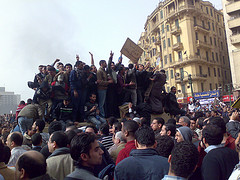
The story of the Egyptian demonstrations continues to unfold (photograph courtesy of Rami Raoof under Creative Commons license)The story of the Egyptian demonstrations continues to unfold (photograph courtesy of Rami Raoof under Creative Commons license)

The current events unfolding in Cairo offer little in the way of narrative comfort. Instead, news commentators, analysts, even participants—weighing in breathlessly from the street on Twitter or Al Jazeera—seem struck by ambiguous meaning of events. Is looting spontaneous or sponsored by the Mubarak government to provoke requests for government protection? There are no clear successors to a Mubarak government, and no clear mechanism for a non-military succession. Why have the police abandoned the protests?

Continue reading

Posted in: Intercultural Communication, International Politics, Middle East, National Security, Political Analysis, War and Violent Conflict Tags: , , ,