
tag archive: Obama administration

How Power Works in the 21st Century

We live in stories. That is, we are always in the process of trying to make sense of what is happening to us and around us. That process drives us – to vote, to go into the street and fight for a nation, to make changes in how we consume, or to do none of the above.

Political leadership that understands that stories, perceptions, values, ideas, culture are present wherever there is human activity have a powerful tool for understanding what drives both change and apathy.

There is no name more firmly associated with linking political power and values and ideas than that of Joseph Nye. He coined the term soft power, which is power that stems from the intangible sources such as “institutions, ideas, values, culture …” as he explains in The Future of Power.

Earlier this week, The Globalist published my article, How Power Really Works in the 21st Century: Beyond Soft, Hard and Smart. In it, I explain how, in a networked, information driven age, the power of symbols and ideas is always an important part of the strategic landscape. Nye’s insight that culture, ideas, perceptions, stories has been deeply assimilated into strategic thinking—a great tribute to him. But the insight has outgrown the categories that once described them. Continue reading
Posted in: Crisis Management, Decision making, International Politics, National Security, Political Analysis, Politics and Policy, Public Diplomacy, Strategic Leadership, War and Violent Conflict Tags: , , , , , , , , ,

The Psychology of Conspiracy Theorists

Conspiracy Theories are Narratives on Steroids

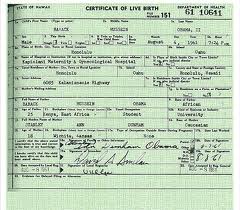
President Obama's Birth Certificate Doesn't Quell Conspiracy Theory that He Isn't an American Citizen

Conspiracy theories are narratives on steroids. In a story, the plot moves forward when one thing causes the next. In a conspiracy theory, cause is an outsized malignant force that knows everything and controls all events. Nothing happens randomly, all events are tied to the larger purpose of an always mysterious, always malefic agent. The amplification of current events into objects of global scrutiny also amplifies conspiracy theories, making them powerful agents in shifting public opinion. Thus with the so-called Birthers framing of President Obama as a foreigner, despite the overt presentation of facts proving that the president was born in the American state, Hawaii.

Conspiracy theorists stubbornly resist the facts at hand, finding reasons other than those given for why events unfold the way they do. Many Pakistanis appear to doubt that Osama bin Laden died as reported in mainstream news. According to a Gallup poll, “nearly half (49%) thought that the whole incident was actually staged for some reason or other. Only 26% thought the al-Qaeda chief was really killed on the night in question.” That’s a lot of people who think that the story circulated in mainstream media is crackpot, at best. And this week, 57% of respondents to a French poll believe that Dominique Strauss-Kahn is the victim of a conspiratorial plot by political rivals, rather than the victimizer of a hotel housemaid, as has been reported. Continue reading

Posted in: Books & Films, Conspiracy Theories, International Politics, Narrative Research, Politics and Policy, Popular Culture Tags: , , , , , , , ,

NY Times tells the Story of the Story of Obama’s Mideast Speech

Official_portrait_of_Barack_Obama

The degree to which communication’s globalization has changed the way we think and talk about the news is evident in today’s reporting on Obama’s Middle East speech. Once upon a time, communication-via newspaper, radio, what have you—was considered a transparent vehicle conveying to readers and listeners what was happening on the ground.

Not so any longer. Now we are in full postmodern swing and “the news” highlights not only things that happen in the world (like presidential speeches), but how they are worded, and who these words are supposed to impact, and how different audiences may interpret what is said. The fact is that these elements of communication always mattered, but the speed and visibility of our interactions with those elements has helped press into relief the degree to which they play a part in how events themselves (like peace talks, political decisions, elections, wars) unfold. All of this made the concept of narrative more important—narrative is the elements of communication in action, all working together on a jointly constructed story of events unfolding in real time, and it also the interplay of that construction with events themselves. Continue reading

Posted in: International Politics, Middle East, National Security, Political Analysis, Politics and Policy Tags: , , , ,