tag archive: narrative research

Narrative Believability Trumps Probability in Decision Making

We may be better at telling the story behind a bet than the probable roll of the dice

We are not statisticians by nature, but storytellers. Why don’t we make better use of that insight in our effort to predict and understand complex problems?

British economist John Kay presented the following problem in a recent Financial Times column When Storytelling Leads to Unhappy Endings:

Linda is single, outspoken and deeply engaged with social issues. Which of the following is more likely? That Linda is a bank manager or that Linda is a bank manager who is an active feminist?

If you chose the second answer you are in good company. Most of us do. Sadly, we’re wrong. Kay explains:

Many people say that the second option is more likely. Yet, the standard response goes, this cannot be. The rules of probability tell us the probability that both A and B are true cannot exceed the probability that either A or B is true. It is less likely that someone is a female Jamaican Olympic gold medalist than that a person is female, or that a person is Jamaican, or that a person is a gold medalist. Yet even people trained in probability make a mistake with the Linda problem. Or is it a mistake? Little introspection is required to understand what is going on. Respondents do not interpret the question as one about probability. They think it is a question about believability.

Believability, as Kay explains further, is narrative’s emblem. In the face of the messy, multi-faceted and open-ended situations that confront us, we humans tend to produce “simplifying narratives” that help make sense of events in a way we find believable, based on our personal, cultural and historical predispositions. Continue reading

Posted in: Crisis Management, Decision making, Narrative and Cognition, Narrative Research Tags: , , , , , , , , ,

“Stand your Ground” Laws Validate Stories of Lethal Force, Silence Others

Yale Law School professor Adam Cohen, advocating the repeal of the Stand Your Ground law that permitted George Zimmerman to claim he killed Trayvon Martin in self defense, wrote in Time Magazine last week that:

If Zimmerman does go to trial, there will no doubt be enormous debates over his guilt or innocence. It is difficult to sort out motives and right and wrong in cases of this sort — especially when one of the critical witnesses, young Mr. Martin, cannot testify about what happened.

There is a direct link between Stand Your Ground laws, which permit those with access to deadly force to use it if they feel threatened, and Martin’s inability to tell his story.

Spirit of JusticeSpirit of Justice, cropped from photograph: Two sculptures "Spirit of Justice," and "Majesty of Justice," Great Hall, 2nd floor, Department of Justice, Washington, D.C.

It is a truism when talking about narrative and public life to assert that some stories are sanctioned, and others silenced. Sometimes it is difficult to identify the mechanism through which such sanction takes place, because it lies in community tradition or social discourse. Stand Your Ground laws press into relief how law can shape which accounts will be viewed as legitimate before they are evaluated by judges and juries. Under the Stand your Ground premise, might makes right. Your ability to lethally harm someone is converted into the credible motivation for doing so, while the victim of a killing is doubly silenced, in court and in life.

When I consider the reported details of the case in the press-the accounts of Zimmerman and his father, the 911 call transcripts, the reports of the neighbors and Martin’s girlfriend, who overheard the encounter by cell phone, I hear a story of two young men who each experienced sensations of threat and fear in the presence of the other. Continue reading

Posted in: Legal Issues, Narrative forms, Narrative Research, News and Journalism, Politics and Policy Tags: , , , , , , ,

The Definition of Strategic Narrative: an Evolving Concept in International Affairs

In an earlier post, I outlined ways in which the term strategic narrative is used in current practice, in public relations—as an element of marketing—and in the academic field of international relations. This post returns to the evolution of the term as an applied concept in foreign affairs.

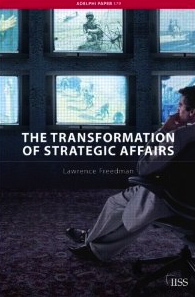
According to International Relations professor Alister Miskimmon (who I asked by email), the first published use of the term “strategic narrative” was by Lawrence Freedman, a professor of War Studies at King’s College, London. In 2006, Freedman wrote a paper called The Transformation of Strategic Affairs. Many of the insights in Freedman’s work stem from the Western experience of war in the post-9/11 years, and the discovery—the hard way, through experience—that the era of large scale land warfare may be decisively over. In its place, the future promises smaller wars, waged by insurgents as well as governments, in which human factors such as behavior, culture and communication play meaningful roles.

In this context, Freedman identifies “strategic narratives” as a kind of secret weapon of networked combatants fighting irregular wars. In Freedman’s view, a story that connects people emotionally to an identity and a mission “helps dispersed groups to cohere and guides its strategy. Individuals know the sort of action expected of them and the message to be conveyed.”

Thus, in Freedman’s definition, narrative is a function of strategy in the most traditional sense related to the science of war. In that vein, he argues that: Continue reading

Posted in: International Politics, Middle East, Narrative Research, National Security, Politics and Policy, War and Violent Conflict Tags: , , , , , , , , , , , ,

Overconfident Narratives Skew Decision Making

In his new book, Thinking Fast and Slow, Princeton professor and Nobel Laureate Daniel Kahneman describes how, as a psychologist serving in the Israeli army, he selected candidates for officer training based on their success in a series of leadership tests. Despite his own and his colleagues confidence in their choices, “the evidence was overwhelming”: they were no good at predicting success at all. Kahneman explains:

You may be surprised by our failure: it is natural to expect the same leadership ability to manifest itself in various situations. But the exaggerated expectation of consistency is a common error. We are prone to think that the world is more regular and predictable than it really is, because our memory automatically and continuously maintains a story about what is going on, and because the rules of memory tend to make that story as coherent as possible and to suppress alternatives. Fast thinking is not prone to doubt. Continue reading

Posted in: Crisis Management, Decision making, Narrative and Cognition, Narrative Research, Strategic Leadership, Uncategorized Tags: , , , , , ,

Lessons in Patriotism

Tile made as part of a project that let people create their own commemorative tiles in 2001; they were later hung on a chain link fence in New York City's Greenwich Village (photo A. Zalman)

Patriotism—love of one’s country—is a treacherous emotion. Too little of it, and we aren’t motivated to make necessary sacrifices on behalf of our national brothers and sisters. Too much of it, or too much of the wrong sort, and exclusionary nationalism—in the form of various ethnic and religious hatreds- takes over. The challenges of getting patriotism right people think that we should avoid these dangers and keep emotion out of our public lives, substituting instead our critical faculties to reason our way to being fair and kind to each other.

But, as philosopher Martha Nussbaum argues, we require this form of love, “distinct from simple approval, or commitment or embrace of principles” in order to act on behalf of people we have never met—those people invoked by the idea of nation. Continue reading

Posted in: Intercultural Communication, National Security, Politics and Policy, War and Violent Conflict Tags: , , , , , , , , , ,

5 Points about Using Numbers in Narrative

random-colored-numbers-480x309

1. Numbers and Narratives: Frenemies

We want to sort story from statistic. Story can seem to be spin, while numbers appear to speak for themselves and reflect an unimpeachable reality. Our insistence that what is “social be “science” makes us think that numbers can stand in for reasoning and context to explain the world around us. Yet, we also don’t understand statistics very well, which makes most of us easy victims of numbers that only seem to mean something, when they’re cushily framed by persuasive stories. But it wasn’t always so, recounts Roberto Franzosi in From Words to Numbers. Consider:

…the etymological roots of the words “count” (numbers) and “recount,” as in narrative or tell a story (words). The word “recount” was imported into English from the French reconter in the fifteenth centry. In French, the verb reconter, a close proxy of conter, hasd been adopted in the twelfth century from the Latin computare (meaning reckon and calculate). And computare (meaning reckon and calculate). And numbers, telling and measuring, counting and recounting, were once simply intellectual activities, involved thinking, or, more appropriately, enumerating or going through a sequential list.

Here then, a short list of ways to bridge the historical divide, and reunite narrative and number.

2. Frameworks Institute: “Don’t fight the narrative with numbers”

According to Frameworks, which helps institutions shape discourse around social issues, numbers and facts are not persuasive to people, if the cited numbers counter strongly held worldviews.

The fact is that many Americans find it hard to digest data and interpret it; mathematical literacy is a major hurdle. But, that aside, the psyche is often resistant to data that erode a comfortable view of the world. Quite often, the numbers are reinterpreted to substantiate an entirely different conclusion. From the social science roots of framing research we learn this maxim: If the facts don’t fit the frame, the facts get rejected not the frame.

New numbers won’t fix an outworn frame, is the message. Continue reading

Posted in: Books & Films, Narrative and Cognition, Narrative Research, Politics and Policy Tags: , , ,

The Psychology of Conspiracy Theorists

Conspiracy Theories are Narratives on Steroids

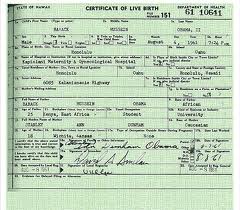
President Obama's Birth Certificate Doesn't Quell Conspiracy Theory that He Isn't an American Citizen

Conspiracy theories are narratives on steroids. In a story, the plot moves forward when one thing causes the next. In a conspiracy theory, cause is an outsized malignant force that knows everything and controls all events. Nothing happens randomly, all events are tied to the larger purpose of an always mysterious, always malefic agent. The amplification of current events into objects of global scrutiny also amplifies conspiracy theories, making them powerful agents in shifting public opinion. Thus with the so-called Birthers framing of President Obama as a foreigner, despite the overt presentation of facts proving that the president was born in the American state, Hawaii.

Conspiracy theorists stubbornly resist the facts at hand, finding reasons other than those given for why events unfold the way they do. Many Pakistanis appear to doubt that Osama bin Laden died as reported in mainstream news. According to a Gallup poll, “nearly half (49%) thought that the whole incident was actually staged for some reason or other. Only 26% thought the al-Qaeda chief was really killed on the night in question.” That’s a lot of people who think that the story circulated in mainstream media is crackpot, at best. And this week, 57% of respondents to a French poll believe that Dominique Strauss-Kahn is the victim of a conspiratorial plot by political rivals, rather than the victimizer of a hotel housemaid, as has been reported. Continue reading

Posted in: Books & Films, Conspiracy Theories, International Politics, Narrative Research, Politics and Policy, Popular Culture Tags: , , , , , , , ,

Strategic Narrative Definition

There is no concrete thing in the world-like a granny smith apple, or a suspension bridge-to which the term “strategic narrative” refers. Nevertheless, there are an increasing number of mentions of this abstraction out there, which means that a shared definition is beginning to form in the collective minds of different groups, so perhaps we are due for a strategic narrative definition.

Existing literature and commentary, as per a Google search of the term, produces two different-if overlapping-definitions “strategic narrative.”

Strategic Narrative in International Relations

For one community, “strategic” refers to the original meaning of the term to refer to military and political objectives. In ancient Greek, “strategos” is a compound term that means commander or leader of an army. “Strategic” materials are items needed to prosecute a war. Strategy is a subdiscipline of military science that focuses on planning war.

As a result, a “strategic narrative” can be understood as the story that a nation must tell itself, and the world, to wage a war or to maintain its competitive advantage in the international system. This is what the term means in the widely circulating document, “A National Strategic Narrative, written by two members of the American military. Anne Marie Slaughter, who introduces the document, defines a strategic narrative in terms of the competitive interests of a nation.

A narrative is a story. A national strategic narrative must be a story that all Americans can understand and identify with in their own lives. America’s national story has always see-sawed between exceptionalism and universalism. We think that we are an exceptional nation, but a core part of that exceptionalism is a commitment to universal values – to the equality of all human beings not just within the borders of the United States, but around the world. We should thus embrace the rise of other nations when that rise is powered by expanded prosperity, opportunity, and dignity for their peoples.

In one definition, then, “strategic narrative” refers to the use of “narrative” as an element of (national) strategy. This definition can be used in other organizations grounded in developing strategy.

In other professional disciplines, however, the concept of narrative, rather than strategy, grounds the definition.

Strategic Narrative in Public Relations

In public relations and related communications fields, the concept of a vehicle that conveys a message or idea is basic. “Message” is a traditional way of referring to a communication vehicle, but whereas a message can be conveyed in a bullet point, a narrative-a story-requires action, and drama and engaging characters. The idea of narratives as a way of communicating with consumers, or voters, or other constituencies has become popular. There is an entire sub-field now called “narrative marketing,” in which PR firms try to drive business growth through a “story-based perspective” A Canadian firm called Narrative Advocacy Media uses the premise to guide their entire marketing, branding and PR practice.

A strategic narrative, for communication practitioners, is an organizational narrative that has been planned to convey strategically meaningful elements about the organization’s identity and intentions. Some firms use the term narrative without really meaning “story” but rather simply to mean a descriptive text that uses words, instead of numbers.

The national security and business and PR understanding of “strategic narrative” overlap in important ways. All of these disciplines understand that the stories we tell and enact-through processes and actions-in our lives as social, political, creatures, can either be random and unthought, or they can be strategic and we can map them to goals we would like to achieve, and create them as spaces to be shared with the publics and audiences we’d like to reach.

Posted in: International Politics, Marketing & Branding, National Security, Public Relations Tags: , , , , ,

How to Market an Unpopular Cause

Kosovo Albanian ethnic costume/dance, courtesy of WikimediaKosovo Albanian ethnic costume/dance, courtesy of Wikimedia

How do you market an unpopular cause?

In a world crowded with attention-worthy causes, why do some get the backing of the international community, while others languish? This good question is being asked by the recipients of this year’s Hope Fellowship, a fund established by the National Albanian American Council to strengthen the role of women in policy and decision-making in the Balkans. They are seeking recognition for their largely unrecognized country, Kosovo, which split off from Serbia and declared independence in 2008. In order to help them in an upcoming training session, I went looking for new models that might help structure the challenge of making their so-far-unpopular country more widely understood in the European Union and beyond.

There are no easy models or quick fixes for a people seeking to establish a legitimate identity among other nations, as Kurds and Palestinians well know. And an over focus on media and message dissemination (should we have a Facebook page? How many radio stations?) while important, is no replacement for the deeper work of developing a national identity story that resonates in international channels.

While seeking models, I found two excellent books that shed light on how embattled causes get attention from the international community. Although they are both specific to politics, they offer valuable insights for any organization seeking to make an impact on another.The Marketing of Rebellion: Insurgents, Media and International Activisim by
Clifford Bob has been highly regarded since its publication in 2005.

Bob seeks to answer the question: “How do a few political movements challenging Third World states become global causes célèbres, whereas most remain isolated and obscure? He answers answers by looking through the dual lens of marketing and globalization. The marketing perspective, as he puts it, “denies that there is a meritocracy of suffering,” in which NGO backing and international sympathy lie—as we would hope—with the best causes. Instead, “local movements insistently court overseas backing, and their promotional strategies count.” Continue reading

Posted in: Books & Films, International Politics, Marketing & Branding, Public Diplomacy Tags: , , , , , , ,

Transmedia Storytelling Goes Beyond Entertainment

Transmedia Storytelling, according to media psychologist Pamela Rutledge in Psychology Today is “the new standard for 21st century communication:”

Transmedia storytelling uses multiple media platforms to tell a single, coherent story or narrative that unfolds across time. Each media piece-whether it’s a website, novel, video games, mobile apps, or a film-provides different points of access and can engage different demographics. Each media components add to the story while functioning as a standalone experience. Each component invites some level of participation. The story can be experienced and appreciated at any stage, but the cumulative effect of all the pieces makes a larger, richer and more engaging message experience.

Until recently, transmedia storytelling has been primarily a term-of-art for the entertainment business. The concept is making its way beyond entertainment into the world of business and organizational strategy. Rutledge explains it as a branding and marketing function, but also holds out executive development benefits. In a transmedia context, the message cannot precede the media. Instead of telling the same story in the same way in different spaces, executives will begin with an understanding of the simultaneously fragmented and interlocking qualities of our communications space, and seek to help us experience their story across time and in different spaces. In the midst of this basic process, they will learn their own story-and its gaps and inconsistencies-much better, according to Rutledge.

The potential applications of this framework in other contexts readily suggest themselves. Political campaigns, development projects, education, and business, could all make use of the formula that transmedia storytelling proposes, in which different pieces of a coherent story are told through different media, in different ways, at various times.

New ways of exploiting this framework are sure to arise, as the list of commentators elaborating, and stretching the concept to new limits, suggests:

  • Transmedia Storytelling 101, by Henry Jenkins
  • Georgy Cohen on transmedia storytelling as part of higher education branding
  • Transmedia Storytelling, What is It? by John Ryan


Posted in: Marketing & Branding, Popular Culture Tags: , ,