tag archive: institutional narrative

The Definition of Strategic Narrative: an Evolving Concept in International Affairs

In an earlier post, I outlined ways in which the term strategic narrative is used in current practice, in public relations—as an element of marketing—and in the academic field of international relations. This post returns to the evolution of the term as an applied concept in foreign affairs.

According to International Relations professor Alister Miskimmon (who I asked by email), the first published use of the term “strategic narrative” was by Lawrence Freedman, a professor of War Studies at King’s College, London. In 2006, Freedman wrote a paper called The Transformation of Strategic Affairs. Many of the insights in Freedman’s work stem from the Western experience of war in the post-9/11 years, and the discovery—the hard way, through experience—that the era of large scale land warfare may be decisively over. In its place, the future promises smaller wars, waged by insurgents as well as governments, in which human factors such as behavior, culture and communication play meaningful roles.
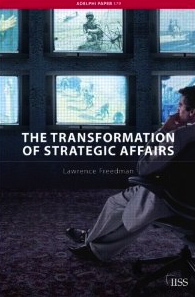
In this context, Freedman identifies “strategic narratives” as a kind of secret weapon of networked combatants fighting irregular wars. In Freedman’s view, a story that connects people emotionally to an identity and a mission “helps dispersed groups to cohere and guides its strategy. Individuals know the sort of action expected of them and the message to be conveyed.”

Thus, in Freedman’s definition, narrative is a function of strategy in the most traditional sense related to the science of war. In that vein, he argues that: Continue reading
Posted in: International Politics, Middle East, Narrative Research, National Security, Politics and Policy, War and Violent Conflict Tags: , , , , , , , , , , , ,

Behavioral Economics Go to War

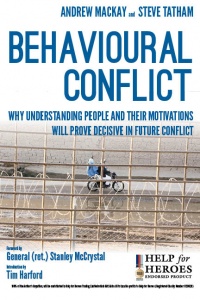
Review of Behavioural Conflict, Why Understanding People and their Motivations Will Prove Decisive in Future Conflict, by Andrew Mackey and Steve Tatham

I cannot think of any books about warfare’s future that come across as hard-hitting, full of actionable pragmatism, and deeply humane all at the same time. But Behavioral Conflict: Why Understanding People and their Motivations will Prove Decisive in Future Conflict is all three. The authors, both career members of the British military, Major General Andres Mackey (Ret) and Royal Navy Commander Steve Tatham (who I count as a friend, having met him in Ankara a few years ago), make their case by drawing on a combination of their own experience, case studies and close analysis of how communication actually factors in war.

Hard-hitting and pragmatic: Mackey and Tatham are precise and lucid about what they mean by “behavior” and how to make use of it to gain advantage in conflict. They, and behavioral psychologist Lee Rowland, who adds a chapter on the science of influence, are not putting forth any of the following: A call for greater “cultural awareness,” a mushy program about how to change others’ attitudes, or a repeat of the last decade’s focus on consumer marketing as the key to public diplomacy. They offer instead this thesis based on a simple chain of claims:

  • The world of human motivation and perception is inevitably complex.
  • It is more important to try to shape behavior than it is to change people’s attitudes.
  • Behavior shaping begins with a discrete grasp of the circumstances under which people already behave in ways that are desirable, and extends to efforts to replicate those or similar circumstances. Continue reading

Posted in: Books & Films, Decision making, Intercultural Communication, International Politics, Narrative Research, National Security, Politics and Policy, Strategic Leadership, War and Violent Conflict Tags: , , , , , , , , , , , , , , ,

Overconfident Narratives Skew Decision Making

In his new book, Thinking Fast and Slow, Princeton professor and Nobel Laureate Daniel Kahneman describes how, as a psychologist serving in the Israeli army, he selected candidates for officer training based on their success in a series of leadership tests. Despite his own and his colleagues confidence in their choices, “the evidence was overwhelming”: they were no good at predicting success at all. Kahneman explains:

You may be surprised by our failure: it is natural to expect the same leadership ability to manifest itself in various situations. But the exaggerated expectation of consistency is a common error. We are prone to think that the world is more regular and predictable than it really is, because our memory automatically and continuously maintains a story about what is going on, and because the rules of memory tend to make that story as coherent as possible and to suppress alternatives. Fast thinking is not prone to doubt. Continue reading

Posted in: Crisis Management, Decision making, Narrative and Cognition, Narrative Research, Strategic Leadership, Uncategorized Tags: , , , , , ,

Afghanistan Narrative, Still Wrong, but Reparable

Earlier this month, Benjamin Hopkins and Magnus Marsden, authors of the forthcoming Fragments of the Afghan Frontier, argued strenuously in a New York Times Op Ed that the U.S. strategy in Afghanistan is as culturally inept as it was when we went to war a decade ago. The American obsession with viewing Afghanistan though the lens of tribal tradition is borrowed from 19th century Brits, whose understanding tribal mores was in large part composed of fanciful inventions of their own. Above all:

Afghanistan is not a country of primitive tribes cut off from the modern world. The singular focus on tribes, the Taliban, and ethnicity as the keys to understanding and resolving the conflict misses the nuances of the region’s past and present. Rather than fanatical tribesmen or poor victims in need of aid, many of these people are active and capable participants in a globalized economy.

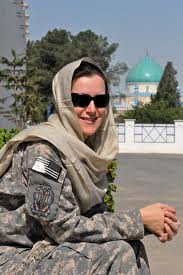
http://navylive.dodlive.mil/index.php/2010/10/19/issues-of-the-veil/#disqus_thread

The U.S. military addresses cultural issues, even in how to dress**

Why does this profound institutional failure persist? I read it and hear versions of the premise that Afghans don’t live in the same globalized world as Americans all the time in defense contexts. The fact that it does persist should give us deep pause about how resources have been expended to create a more ‘culturally aware’ national security community. Continue reading

Posted in: Intercultural Communication, International Politics, Middle East, Narrative and Cognition, Narrative Research, National Security, Political Analysis, Politics and Policy, War and Violent Conflict Tags: , , , , , , , , ,

Narrative in Complex Decision Making: an Interview with Mary Crannell

Mary Crannell is one of those people whose broad intelligence and enthusiasm are hard to contain, as I learned when we met recently through a shared acquaintance. As the president of Idea Sciences, a decision-making support consultancy based in Alexandria, VA, Mary spends much of her time thinking about what technologies and processes will help her customers—such as the IMF, NATO, QinetiQ, the US Army, the UK Army, Verizon and Herman Miller, to name a few—arrive at good decisions. She is a frequent traveler to sites of conflict, as in a recent visit to Kabul, Afghanistan, where decision-making is an urgent, complex and ongoing task.

I was gratified when Mary agreed to share some of her thoughts on the role of narrative in decision-making generally, and in directing the American role in the world in productive directions, which is a concern many of her clients share.

Mary Crannell, President, Idea Sciences

AZ: How do you use narrative frameworks to help people make decisions?

MC: It is important to give people a way to define the vision of what they are trying to accomplish whether they are leading a state, a nation or an international organization. Is the system you are leading “on purpose?” We start with a vision. Continue reading

Posted in: Decision making, Information Systems, Intercultural Communication, International Politics, Middle East, Narrative Research, National Security, Public Diplomacy, Strategic Leadership, War and Violent Conflict Tags: , , , , , , , , , , ,

The Psychology of Conspiracy Theorists

Conspiracy Theories are Narratives on Steroids

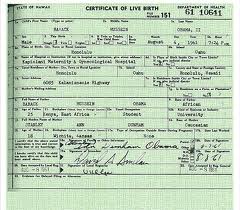
President Obama's Birth Certificate Doesn't Quell Conspiracy Theory that He Isn't an American Citizen

Conspiracy theories are narratives on steroids. In a story, the plot moves forward when one thing causes the next. In a conspiracy theory, cause is an outsized malignant force that knows everything and controls all events. Nothing happens randomly, all events are tied to the larger purpose of an always mysterious, always malefic agent. The amplification of current events into objects of global scrutiny also amplifies conspiracy theories, making them powerful agents in shifting public opinion. Thus with the so-called Birthers framing of President Obama as a foreigner, despite the overt presentation of facts proving that the president was born in the American state, Hawaii.

Conspiracy theorists stubbornly resist the facts at hand, finding reasons other than those given for why events unfold the way they do. Many Pakistanis appear to doubt that Osama bin Laden died as reported in mainstream news. According to a Gallup poll, “nearly half (49%) thought that the whole incident was actually staged for some reason or other. Only 26% thought the al-Qaeda chief was really killed on the night in question.” That’s a lot of people who think that the story circulated in mainstream media is crackpot, at best. And this week, 57% of respondents to a French poll believe that Dominique Strauss-Kahn is the victim of a conspiratorial plot by political rivals, rather than the victimizer of a hotel housemaid, as has been reported. Continue reading

Posted in: Books & Films, Conspiracy Theories, International Politics, Narrative Research, Politics and Policy, Popular Culture Tags: , , , , , , , ,

NY Times tells the Story of the Story of Obama’s Mideast Speech

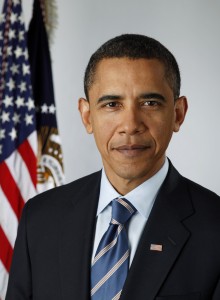
Official_portrait_of_Barack_Obama

The degree to which communication’s globalization has changed the way we think and talk about the news is evident in today’s reporting on Obama’s Middle East speech. Once upon a time, communication-via newspaper, radio, what have you—was considered a transparent vehicle conveying to readers and listeners what was happening on the ground.

Not so any longer. Now we are in full postmodern swing and “the news” highlights not only things that happen in the world (like presidential speeches), but how they are worded, and who these words are supposed to impact, and how different audiences may interpret what is said. The fact is that these elements of communication always mattered, but the speed and visibility of our interactions with those elements has helped press into relief the degree to which they play a part in how events themselves (like peace talks, political decisions, elections, wars) unfold. All of this made the concept of narrative more important—narrative is the elements of communication in action, all working together on a jointly constructed story of events unfolding in real time, and it also the interplay of that construction with events themselves. Continue reading

Posted in: International Politics, Middle East, National Security, Political Analysis, Politics and Policy Tags: , , , ,

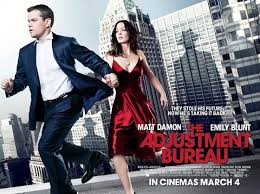
“Adjustment Bureau” Adjusts Individual Lives to Fit Institutional Narratives

The Adjustment BureauThe Adjustment Bureau is a film about narratives, and about who has the power to tell them. Based loosely on the 1954 Philip K. Dick short story, “Adjustment Team,” it tells of the story of the effort by one man (played by Matt Damon) to wrest control over his own life from larger forces. Meanwhile, those forces, in the institution of the “Adjustment Bureau,” maintain that control of human destiny lies in their hands.

“You only have the appearance of free will,” Damon is instructed by one of the elders in the Bureau, an organization that appears to be a cross between a Ford factory and Heaven. The Adjustment Bureau wants Damon, a New York senator, to be president and change the course of world events. They fear that if Damon follows his own heart, and his love for a ballerina, he will lose his ambition.

The film offers much food for thought at a moment when personal struggles to maintain personal control over individual destinies, despite the larger forces of nature and politics, are playing out dramatically on virtually every continent. In Japan, in Libya, in the American Midwest, in Australia, where floods devastated the Queensland coast this winter.

One can’t help but wonder whether the redemptive possibilities that Dick’s vision offers is a fantasy or a model we can take to heart. It also asks us to consider how much agency the institutions that drive our lives possess: our governments, banks, universities, and companies. In The Adjustment Bureau, the institution is deeply interested in the course of individuals’ actions, but only to the extent that they align with the larger intentions of the organization.

Either way, the dramatic conflict between the determinism of the faceless institutions in which we live and the protagonists, who battle that determinism, rings true. And recognizing the inherent tension between individuals and institutions, instead of pasting them over, is a useful step in teasing out the real story of how we realize our ambitions.

Posted in: Books & Films, Popular Culture Tags: , ,