tag archive: institutional narrative

Book Review: Communities of the Future Could Flourish amid Technological Change. Here’s How.

Media headlines devote an increasing amount of attention to how governments and large corporations can plan for the future. We know change is coming: in climate, in demography, in the availability of natural resources, in the structure of economies.

Yet little attention—until now— has been given those who must live the effects of those changes: the community leaders and their constituents who battle floods and heat, deal with aging neighbors and their needs, find ways to educate children who were born digital, and not least match the newly jobless to new work, in a shifting economy that is likely to be further disrupted by automation in coming years.

Rick Smyre and Neil Richardson propose a new vision for the future of local communities

Rick Smyre and Neil Richardson propose a new vision for the future of local communities

In their new book, Preparing for a World that Doesn’t Exist—Yet: Framing a Second Enlightenment for Communities of the Future, Rick Smyre and Neil Richardson address that lacuna. They fill it with worthy insights for community leaders who want to think and plan now for a world being overturned by technology and its effects. The authors are persuasive in their reminder that since communities are where change is implemented and felt, it is in communities where a transformation in leadership and planning must take place. As they point out, reforms do not actually change systems, only transformations do.

A New World Requires a New Language

The book is not an easy read. It is overflowing with neologisms: Master Capacity builder, the Creative Molecular Economy, and Polycentric Democracy are just a few of many terms the authors use to describe their new concepts. But stick with them, and a method behind this lexical riot begins to come clear.

If we are in fact at the edge of a wholly new world, visible to us only through the weakest of signals on the horizon, we will need a new language to describe it. Smyre and Richardson call this a‘different kind of different’ understanding. The authors describe this new world through a set of discrete principles that repeatedly stress how we will shortly live in environments that are interconnected, interdependent and in which non-linear effects unfold.

What this means is that we need a new community strategic narrative: a way of talking about and living in communities in a way that we are not used to. Everyday life in a thriving future community may feel at its best like a constantly unfolding set of connections, opportunities and solutions. This is a far cry from a daily routine that, if it is routine, satisfies us with its orderliness and lack of surprise. We will all need to learn anew how to live in this kind of future. What Smyre and Richardson propose is that we can learn, and that our community leaders can help us to do so.

An Exhilarating Vision, A New Story for Local Communities

Preparing for a World that Doesn’t Exist Yet is ultimately exhilarating — it swings from provocative abstractions to concrete recommendations and ideas, including worksheets, to address communities’ educational, governance, economic and healthcare needs in the emergent future.

Take, for example,the future economic framework they envision.

The “Creative Molecular Economy,” as distinct from the industrial and knowledge economies before it, will be characterized by a constant state of disruption (thus it is ‘creative’) and by individual entrepreneurs who will co-create “products, service and ideas” through “interlocking networks” (thus, molecular).

After working through this idea, the authors turn to the concrete ways that communities can plan for and leverage this state of affairs. Does a community need, for example, concept papers to begin thinking about how to get more start-up capital for entrepreneurs in the door? Could a Futures Economy Council in the local chamber of commerce seed a network of future-minded citizens? What about pilot programs and events that begin to introduce citizens to this new economic structure? Yes, yes and yes, of course.

In these narrative swerves, Smyre and Richardson have created a book seems to resemble the future they envision: It overflows with connections and interconnections, big ideas and micro-plans, leaps and deep observations. The book isn’t linear, so you don’t have to read it in order to appreciate the authors’ vision of future communities that embrace technological change, while helping all of their citizens realize their best potential.

You can buy the book on Amazon here.

**Disclaimer. I know the authors and am mentioned in the book’s preface.

Posted in: Books & Films, Decision making, Innovation, Politics and Policy, Strategic Leadership Tags: , , , , , , , , , ,

If You Want to Generate Strategies for Future Success, Start with Narratives and Metaphors

Terms like metaphor, myth, story and narrative are not necessarily the first that come to mind when considering how to develop a future-facing national strategy. But they should be. This point was made in brilliant ways by the participants at the Atlantic Council’s second annual Global Strategy Forum in Washington DC earlier this week.

Metaphors Shape how We Understand Reality

Our collective understanding of reality is shaped in profound ways by metaphors. A metaphor is a statement suggesting that something with which we are unfamiliar is like something with which we are familiar. New technologies often produce new metaphors for how we understand society writ large. The idea of the “networked organization,” for example, grows out of a comparison with computer networks. Being able to generate metaphors about the future can help strategists pave the way to creating the systems or processes that will be required for success in it.

I had the honor of sharing the opening session stage with DARPA Director Dr. Arathi Prabhakar and Rhodes College political scientist Jennifer Sciubba and our moderator Toffler Associates CEO Deborah Westphal to discuss Strategic Foresight.

Arathi talked about DARPA’s investments in artificial intelligence, Jennifer explored some of our myths about global demography, and I addressed our need for anticipatory metaphors (beginning at 44:21).

When Conditions Change, so Must Our Strategic Narratives

Despite our 3 different topics, we all stressed that changes in our global condition means that we must think in new ways about how to be successful. As the conditions of the industrial age fade away, so will our ability to define success in the terms of that era.

When global trends portend dramatic change, as ours do now, we must assess how we think about success, and rewrite the stories and myths that guide us in our quest to compete successfully. A hundred years ago, technological conditions privileged size—big tanks, and sizable armies could take territory and resources. Our guiding principle for success became: lets get big and control large spaces.

The rise of computer networks changed our social metaphors. We think in terms of networks now: social networks, networking, and everything from human bodies to neighborhoods as networks. We didn’t simply discover that all of these phenomena are arranged as networks, we applied a guiding metaphor to discover ways in which they are like networks.

My question is: what’s next? What will be the guiding metaphor of 25 years from now? The organization that can begin to frame an anticipatory metaphor-the future of our own imaginations- is preparing itself conceptually for the future. After that, structures, processes and systems will follow.

And while our conversation at the Atlantic Council was about the American role in the world, the basic takeaways for how to generate strong strategy apply to organizations everywhere.

To see the entire day’s sessions, go: here.


Posted in: Conferences, Decision making, Innovation, National Security, Strategic Communication, Strategic Leadership, War and Violent Conflict Tags: , , , , , , , , , , , , ,

Craft Your Past in Order to Shape your Future: the Power of Legacy Stories in Strategic Communications

History belongs to the victors, it is said. But victors also arise because they have asserted interpretive control over their own history. Unlike most inheritances, the narrative that we inherit about who we are and what we are like is one that we have the ability to shape.

Powerful communicators understand that they have a meaningful degree of control over the way they interpret their legacy.

Legacy narratives are the stories that we have inherited that tell us who we are and our place in the world. No one is born without one — we are all born into something, a context, a country, into wealth or poverty, into a family that feels it once was great and has now fallen, or one that feels it is on the ascendent.

Institutions function the same way. The individuals who make them up enter them or lead them learn those narratives when they arrive on the scene. In fact, one of the ways that we become attached to institutions is by absorbing and championing their legacy identities. Companies, schools and universities, and national governments work hard to instill a sense of their legacy in their stakeholders.

When the conditions for success change, the legacy story may no longer be effective

Library of Congress Family

You can interpret your legacy-the story into which you were born-in ways that productively guide your future story.

Legacy stories serve as a touchpoint that helps us explain our current conditions and why we are successful (or failures).

When conditions change, however, the story may suddenly lose its explanatory power, pushing other institutional practices out of alignment.

Case Study: Structural Changes can displace a strong sense of legacy

In in the mid-2000s, I began work at a Fortune 500 company that had just gone from employee-owned to publicly owned. The shift from an employee owned company was a topic of big discussion. Some people had gotten wealthy in the shift, others not so much, but the more salient story was about the disappearance of a shared identity when employee ownership disappeared. People’s sense of who they were had disappeared.

The narrative that people had shared for many years about the firm was that it was a place where independent ideas and attitudes were valued, and where great ideas could find a home. This identity was wrapped up in employee ownership. And when that disappeared so did many people’s sense of loyalty and identification with the firm. In the ensuing years, while I was there, the transition was rocky. We went through several CEOs and multiple internal organization changes.

With greater attention to the symbolic narrative around employee ownership, the firm’s leadership could probably have smoothed that transition considerably. They could have communicated more effectively to employees how important values like independence of thought among employees would continue to be valued.

Case Study: Strong legacies can inhibit necessary changes

A strong sense of legacy can make it very difficult to initiate necessary changes. I saw this firsthand as the CEO of a global membership organization. It was fifty years old, was bleeding members and badly needed to change its ways and modernize. But it had a very powerful legacy story about ‘how things were done’ and ‘who we are’ that was maintained both internally by employees and externally through many of its members. They had helped to build the organization.

This legacy became a barrier, and it became my job to stitch the organization’s existing story to its potential future in a new way. I was fortunate to have advisors around me who helped me to communicate with those who were most afraid of change with more grace than I might have otherwise, and with respect for the important legacy of the organization.

Take Control of Your Legacy Story

The distinct quality of legacy stories is that they can seem static and unchangeable. You know that a legacy story is in operation when someone tells you “that is just the way we are” or that “this is how we have always done things.” The value of the legacy seems to grow as time goes on.

Legacy stories are like magnets that attract and repel— eventually everything that happens can seem to be either because of the central story or in spite of it. They get heavier. They get harder to move. They get harder to change. The story itself takes on the power of immovable fact.

But it doesn’t have to be this way.

Legacies are rewritten successfully when organizations or members of them start telling the story differently. This may be a grassroots effort or a conscious decision on the part of leaders.

A Quick Note about Ethics

One small but important note about ethics and integrity. Making up pasts out of whole cloth or lying about the past is not the route to lasting power and not what I am talking about here. Ethics and strength go hand-in-hand. People know when legacy stories are being stretched or when they are being told without integrity or respect for their basic facts. Within that ethical band, though, we have room to create from the ingredients of our inherited stories, those that will guide our intentions and communicate our values going forward.

What is Your Legacy Story? Is it Hurting or Helping your Ambitions?
Do you have a legacy story that is holding you or your organization back? Here are a few questions to ask to help clarify:

  • What are our legacy stories?
  • How do we use our legacy story? Do we use it to perpetuate the status quo or to mobilize change?
  • What are the forgotten parts of our legacy? Are any of those usefully revived in order for us to reinvent ourselves?
  • Are there values or activities that we are interested in pursuing in the future? How can we link our legacy to new initiatives in ways that fortify and support our new directions, and that help explain to outsiders what we are doing?
  • What are the key moments or events that seem to illuminate the theme of the legacy story? Are there other moments, or events or even representative figures who should be brought in in order to begin shifting the story?
  • Legacy stories are often told in legacy syntax, using habitual turns of phrase. What happens if you retell the story in a different way and what does it illuminate?

If you have comments about legacy stories or questions, I’d welcome hearing from you. You can reach me at [email protected] or via the contact form here.

Posted in: Intercultural Communication, Marketing & Branding, Strategic Communication, Strategic Leadership, Uncategorized Tags: ,

7 Necessary Narratives for the New Digital Age

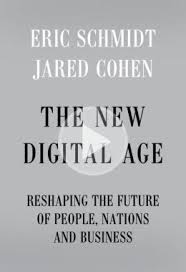
In the future, nearly everyone will be connected to the Internet and to each other, claim Jared Cohen and Eric Schmidt in The New Digital Age.

Mass connectivity will transform our relationships, our governments, our work, our bodies and the objects around us. But even these dramatic transformations will not change the fact that we are corporeal creatures, and that we will still live lives grounded in phnew digital agephysical circumstances, whether those are urban or rural, rich or poor, lucky or unlucky.

We will also come into the world with a set of inherited stories about who we are, what our lives mean, and what the future looks like. These stories will have the same universal threads they always have: we will still have stories of love, stories of family, stories that try reconcile life’s fundamental unfairness. But they will also fail in important ways to explain the transformations of our lives, and the new ways in which we will do old things.

We need new stories

We need new stories. Creating them is of necessity not only a collective task, but a transnational one. As we grow even more connected, we also grow more capable of exporting our ideas about who we are and what is important on others, wherever they are. Yesterday, two Nigeria-descended men hacked a third to death on a London street, and then stayed on the scene to tell how they saw themselves in a world at war: “We must fight them as they fight us.” As we grow more connected, and more willing to share our selves with others, maybe pernicious forms of shame—that universal emotion—will be knocked out, and we’ll be more healthy.

It all depends on how we decide to tell our future. Here are seven of the areas where we will need new stories in the new digital age, as described by Schmidt and Cohen.


7 Necessary Narratives for the New Digital Age

1. The Body

Both religion and science fiction have long dreamed of worlds in which humans transcend bodies, to become virtual souls. In the new digital world, however, we will shape our identities online but experience them in the physical world. How will we understand health and illness, and mortality, if we have the capacity to monitor our daily rhythms in minute ways?

2. Personal Identity

Schmidt and Cohen tell us that identity will be each of our most valuable commodity in the future, and that our true personal identity will be the one that we shape online.

How will we choose to tell our life stories and in what ways will the autobiographical form change in a world in which there is essentially no privacy? Where will we think our “real” self resides. Where will the associations with privacy as a space of intimacy, daydreaming, erasable exploration, unrecorded experimentation with who we are, in order to practice who we could be, relocate, when we have no privacy?

3. News

Our concepts of journalism and news reporting have already undergone dramatic changes; journalism has become in many ways a collective task that falls to professional reporters and citizens alike, and to groups and organizations that put out versions of the news that support particular causes or points of view.

As an increasing number of voices join in the journalistic task, the work of professional media will evolve. The media might become a trusted validator of unsubstantiated accounts, or an integrator of news from different kinds of sources. The value of objectivity may fade, while versions of what subjective news that maintains its integrity will emerge—this will be the new narrative of news.

4. Cybersecurity

Different forms of public security – whether they are in the arena of health, or counterterrorism, or child safety – operate according to different metaphors, storylines and images. Those around cyber-security may coalesce around metaphors of health and hygiene: we are told to practice “cyber-hygiene.

Schmidt and Cohen introduce Microsoft Chief Research and Strategy Officer, who has also recommended a “World Health Organization” for cyber-activity, and the practice of quarantining computers that have been infected with viruses. As Adriane Lapointe, a National Security Agency official has observed, the public health metaphor may serve as the basis for a meaningful public narrative:

Like any good metaphor, it invites us to consider illuminating similarities between two overtly dissimilar things—malware on the internet and infectious disease in a community—similarities that can lead us to reframe a familiar topic. It also identifies a policy precedent, reminding us that we do, as a society, recognize the need to impose some restrictions on individuals who involuntarily pose a certain kind of threat to others, and that we have a mechanism to do this which might be relevant to cybersecurity matters. Whether we ultimately decide that this mechanism or approach is appropriate to the cyber challenge, the metaphor has certainly helped to broaden thinking about the subject.

5. National Identity

The nation-state has been the bedrock of our civic identities for the last couple of centuries, and the idea that every nation deserves its own territorial state a driving narrative of the 20th century. But new diasporas resulting from increased migration, coupled with digital connectivity, are decoupling the nation from the state, creating virtual, de-territorialized nations.

How will a de-territorialized nation narrate its future? How will cultural practices that have been grounded in place be translated into practices of other place? Will other forms of bonding, such as investment in the home country, become a standard part of an individual’s narrative of their national identity? Will the idea of a relationship to a particular land wither for some communities, and if so, to what effect?

6. Dissident Leadership

There is much to protest in this world, and the low cost of entry to share dissident views will lead to a widening number of protestors seeking attention for their cause. Many of these causes will be worthy and compelling, so it is no longer enough to offer the platitude the most persuasive stories will gain our attention. Rather, we—the public that dissidents must win over-may begin to change the meta-story, or standards, by which we evaluate leaders and causes.

Schmidt and Cohen offer that dissident leaders likely to become popular will be able to: “command a following and crowd-source their online support,” will know how to exploit digital marketing tools, and will show their commitment by putting themselves at physical risk.

We can already guess that digital marketing skills are not the most important skills for someone seeking a leadership role in a dissident setting. We can use this recognition starting now to inoculate ourselves against easily accepting simply the most digitally skilled. We can ask, instead, what are the qualities—what is the story—of a leader who is likely to be successful, who understands the institutions they want to change, and lead that change on the ground as well as in virtual space.

7. Justice

Cameras in our smallest devices make it easy to record the human capacity for barbarism in its many forms. Violence, sexual assault, cruelty to animals, hate speech all find their way into digital form on a regular basis, easily arousing our instinctual repugnance. As Schmidt and Cohen observe, these recordings can become the basis for “crowd sourced justice,” which may take the form of mob retaliation, from harassment to violence.

But we could instead form new habits of collective responsibility—using our connectivity to make sure that those who commit bad acts are dealt with according to our legal precepts and best values, and to explore together how to deal with bad behavior at the community level. Which narrative, and which set of practices that prevail, depend on how we decide to narrate our opportunity to ‘crowd source justice,’ which behaviors we highlight and celebrate, and how we talk about what we see online.

Posted in: Books & Films, Intercultural Communication, International Politics, Marketing & Branding, Popular Culture, Public Relations Tags: , , , , , , ,

Resilience Narratives Key to Resilient Systems

The 2013 World Economic Forum Conference that began today in Davos is dedicated this year to resilient dynamism. As Arianna Huffington noted earlier in the day, the key concept that gives rise to the need for resilience is our global interconnectedness. Quoting Rockefeller Foundation President Judith Rodin, she cites five attributes that resilient systems characteristically share:

  • Spare capacity
  • Flexibility — the ability to change, evolve, and adapt in the face of disaster.
  • Limited or “safe” failure, which prevents failures from rippling across systems.
  • Rapid rebound — the capacity to reestablish function and avoid long-term disruptions.
  • Constant learning, with robust feedback loops.

Huffington adds a sixth, “the will to want to be resilient.”

To that list, I feel we must add a seventh requirement for the present and future, Resilience Narratives: stories that will help disparate and potentially adversarial players see themselves as active participants in collaborative futures. Continue reading

Posted in: Conferences, Crisis Management, Decision making, Intercultural Communication, International Politics, Politics and Policy, Strategic Communication, Strategic Leadership Tags: , , , , , , , , , ,

The Need for a New Story: Faizullah Jan Compares Narratives of the U.S. Drone War in Waziristan

The narratives told in Pakistan and by international organizations about the secret U.S. drone war in Waziristan are so confused that “the people who are caught in the crosshairs of the war have lost their voice and their story to tell.” In this guest blog, reprinted from Dawn.com, Jan explains the issues.

Reprinted from Dawn.com

January 5, 2013 by Faizullah Jan

THERE are competing narratives about the US’s drone war in the Waziristan area, a bastion of militants. These narratives have so far failed to gain traction in the public, inside Pakistan and elsewhere.

The Pakistani narrative goes like this: the drone attacks are a violation of our national sovereignty. They kill innocent people, including women and children, as collateral damage and hence incite suicide attacks across the country in a cycle of reprisal and retaliation, thus killing more Pakistanis, which again includes women and children.

In short, suicide attacks on public places like markets — and even mosques and shrines — are provoked by drone attacks. If there are no drone attacks, there will be no suicide attacks in cities and towns. Continue reading

Posted in: Guest posts, Intercultural Communication, International Politics, National Security, News and Journalism, Political Analysis Tags: , , , ,

Narrative for Survival: My Grandmother’s Story

Stories can save lives. In One Thousand and One Nights, Sheherezade uses her storytelling talents to end King Shahrayr’s plot to punish his unfaithful wife by punishing all of the women of his kingdom. Having put to death the unfaithful Queen herself, the King embarks on a plan to marry a virgin of the Kingdom each night, and to have each killed at dawn. That is, until he marries Sheherezade, who spends her wedding night narrating to the King a most exciting and suspenseful tale. So exciting that the King puts off her death to hear how the story continues. And so their story continues for a thousand and one nights, after which the King abandons his goal to punish women, and marries Sheherezade.

My grandmother may not have had a thousand stories, but she had at least one, and telling it to an American Consul in 1939 saved her life and that of her husband and baby, when it permitted her to leave warring Europe on one of the last ships to cross the Atlantic. I had the opportunity to tell it at a local TedX event earlier this year, and was delighted when TEDx organizers chose it as one of their favorites. I’d love to hear about other stories that have saved lives, if you have one you’d like to share.

Posted in: Books & Films, Intercultural Communication, International Politics, Narrative forms, Politics and Policy, Popular Culture, War and Violent Conflict Tags: , , , , , , , , , ,

Intertextuality for Strategic Communication

The Power of Reference, Allusion and Quotation in Communication

Two recent films, Skyfall and Anna Karenina, are made more intensely meaningful by their intentional intertextuality-their incorporation of previous iterations and interpretations of the story they are themselves telling. Both offer insights into the ways communicators can benefit from the same kind of internal referentiality.

The Concept of Intertextuality

Literary and linguistic theorists began to work with the concept of intertextuality in the mid-1960s, when theorist Julia Kristeva coined the term. Scholarly definitions have proliferated and grown increasingly technical in the intervening half century. For our purposes, the following definition works just fine: Intertextuality means that texts – novels, paintings, films, but also tax codes and thank you letters –gain meaning not through their reference to an external reality, but by their reference to pre-existing other texts. Intertextuality is not a choice, but rather an inevitable by- product of creating, because we are always creating into already existing histories, discourses and ways of interpreting. These existing frames have already partly shaped what we will produce and how it will be recieved. An author or an artist may intend to give us something original, but they can’t, fully. We readers, in turn, never have direct access to a work, but can only get at it by making our way through its prior iterations and interpretations.

James Bond and Anna Karenina are among the most iconic popular texts in modern Western culture. The James Bond series, which is the longest-running film series in history, has given us the rules by which we define spy thrillers. Anna Karenina is no longer only the Leo Tolstoy novel, but also the dozens of derivative films, ballets, operas and musicals that have been created since the late 19th century.

Both are completely enmeshed in our everyday language — we think things about ourselves through the mesh of their expressions:“Bond, James Bond,” and “Shaken, not stirred,”are shorthand invocations of suave masculinity. “All happy families are alike, but each unhappy family is unhappy in its own way,” has become a catch-all syntax for describing the singularity of just about anything, including in statistics, where the “Anna Karenina principle” is applied to ecological and economic puzzles.

Semiotics professor Daniel Chandler explains the implications of intertextuality: Continue reading

Posted in: Books & Films, Intercultural Communication, Marketing & Branding, Narrative forms, Popular Culture, Public Relations, Strategic Communication Tags: , , , , , , ,

Measuring National Power

Has the Eurozone crisis led to a loss of European Union power?

Washington D.C. was even more full of diplomatic cars and dark suited men than usual this weekend, as the the World Bank and International Monetary Fund held their annual spring meetings. Historically dedicated to shoring up ‘developing’ regions, this year’s focus was on the Eurozone crisis, that ongoing ripple of effects from the near financial collapse of several EU countries.

Some policy makers think that the EU’s loss of economic power will reduce its power on other issues, as the New York Times has reported: Continue reading

Posted in: Crisis Management, Decision making, International Politics, Marketing & Branding, National Security, Politics and Policy, Public Diplomacy, Public Relations Tags: , , , , , ,

“Stand your Ground” Laws Validate Stories of Lethal Force, Silence Others

Yale Law School professor Adam Cohen, advocating the repeal of the Stand Your Ground law that permitted George Zimmerman to claim he killed Trayvon Martin in self defense, wrote in Time Magazine last week that:

If Zimmerman does go to trial, there will no doubt be enormous debates over his guilt or innocence. It is difficult to sort out motives and right and wrong in cases of this sort — especially when one of the critical witnesses, young Mr. Martin, cannot testify about what happened.

There is a direct link between Stand Your Ground laws, which permit those with access to deadly force to use it if they feel threatened, and Martin’s inability to tell his story.

Spirit of JusticeSpirit of Justice, cropped from photograph: Two sculptures "Spirit of Justice," and "Majesty of Justice," Great Hall, 2nd floor, Department of Justice, Washington, D.C.

It is a truism when talking about narrative and public life to assert that some stories are sanctioned, and others silenced. Sometimes it is difficult to identify the mechanism through which such sanction takes place, because it lies in community tradition or social discourse. Stand Your Ground laws press into relief how law can shape which accounts will be viewed as legitimate before they are evaluated by judges and juries. Under the Stand your Ground premise, might makes right. Your ability to lethally harm someone is converted into the credible motivation for doing so, while the victim of a killing is doubly silenced, in court and in life.

When I consider the reported details of the case in the press-the accounts of Zimmerman and his father, the 911 call transcripts, the reports of the neighbors and Martin’s girlfriend, who overheard the encounter by cell phone, I hear a story of two young men who each experienced sensations of threat and fear in the presence of the other. Continue reading

Posted in: Legal Issues, Narrative forms, Narrative Research, News and Journalism, Politics and Policy Tags: , , , , , , ,