tag archive: global politics

NY Times tells the Story of the Story of Obama’s Mideast Speech

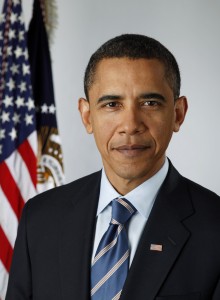
Official_portrait_of_Barack_Obama

The degree to which communication’s globalization has changed the way we think and talk about the news is evident in today’s reporting on Obama’s Middle East speech. Once upon a time, communication-via newspaper, radio, what have you—was considered a transparent vehicle conveying to readers and listeners what was happening on the ground.

Not so any longer. Now we are in full postmodern swing and “the news” highlights not only things that happen in the world (like presidential speeches), but how they are worded, and who these words are supposed to impact, and how different audiences may interpret what is said. The fact is that these elements of communication always mattered, but the speed and visibility of our interactions with those elements has helped press into relief the degree to which they play a part in how events themselves (like peace talks, political decisions, elections, wars) unfold. All of this made the concept of narrative more important—narrative is the elements of communication in action, all working together on a jointly constructed story of events unfolding in real time, and it also the interplay of that construction with events themselves. Continue reading

Posted in: International Politics, Middle East, National Security, Political Analysis, Politics and Policy Tags: , , , ,

Strategic Narrative Definition

There is no concrete thing in the world-like a granny smith apple, or a suspension bridge-to which the term “strategic narrative” refers. Nevertheless, there are an increasing number of mentions of this abstraction out there, which means that a shared definition is beginning to form in the collective minds of different groups, so perhaps we are due for a strategic narrative definition.

Existing literature and commentary, as per a Google search of the term, produces two different-if overlapping-definitions “strategic narrative.”

Strategic Narrative in International Relations

For one community, “strategic” refers to the original meaning of the term to refer to military and political objectives. In ancient Greek, “strategos” is a compound term that means commander or leader of an army. “Strategic” materials are items needed to prosecute a war. Strategy is a subdiscipline of military science that focuses on planning war.

As a result, a “strategic narrative” can be understood as the story that a nation must tell itself, and the world, to wage a war or to maintain its competitive advantage in the international system. This is what the term means in the widely circulating document, “A National Strategic Narrative, written by two members of the American military. Anne Marie Slaughter, who introduces the document, defines a strategic narrative in terms of the competitive interests of a nation.

A narrative is a story. A national strategic narrative must be a story that all Americans can understand and identify with in their own lives. America’s national story has always see-sawed between exceptionalism and universalism. We think that we are an exceptional nation, but a core part of that exceptionalism is a commitment to universal values – to the equality of all human beings not just within the borders of the United States, but around the world. We should thus embrace the rise of other nations when that rise is powered by expanded prosperity, opportunity, and dignity for their peoples.

In one definition, then, “strategic narrative” refers to the use of “narrative” as an element of (national) strategy. This definition can be used in other organizations grounded in developing strategy.

In other professional disciplines, however, the concept of narrative, rather than strategy, grounds the definition.

Strategic Narrative in Public Relations

In public relations and related communications fields, the concept of a vehicle that conveys a message or idea is basic. “Message” is a traditional way of referring to a communication vehicle, but whereas a message can be conveyed in a bullet point, a narrative-a story-requires action, and drama and engaging characters. The idea of narratives as a way of communicating with consumers, or voters, or other constituencies has become popular. There is an entire sub-field now called “narrative marketing,” in which PR firms try to drive business growth through a “story-based perspective” A Canadian firm called Narrative Advocacy Media uses the premise to guide their entire marketing, branding and PR practice.

A strategic narrative, for communication practitioners, is an organizational narrative that has been planned to convey strategically meaningful elements about the organization’s identity and intentions. Some firms use the term narrative without really meaning “story” but rather simply to mean a descriptive text that uses words, instead of numbers.

The national security and business and PR understanding of “strategic narrative” overlap in important ways. All of these disciplines understand that the stories we tell and enact-through processes and actions-in our lives as social, political, creatures, can either be random and unthought, or they can be strategic and we can map them to goals we would like to achieve, and create them as spaces to be shared with the publics and audiences we’d like to reach.

Posted in: International Politics, Marketing & Branding, National Security, Public Relations Tags: , , , , ,

“Global Drops out of “War on Terror” in post-bin Laden Narrative

When President Obama addressed the nation and the world last night to report Osama bin Laden’ death, I was surprised by the absence of a global element in his message. Obama is known for his multilateral, global approach to foreign affairs, and it the lens through which he seems most comfortable framing American actions in the world. The war waged by the Bush Administration in the aftermath of the 9/11 attacks was relentlessly globalized, as the name “global war on terror” suggested. And it has been a consistent thread in U.S. messaging to remind those in the Middle East and Central Asia, and elsewhere, that bin Laden’s brand of global jihad killed more Muslims than any other group.

Obama’s message last night made a strange reversal. The larger narrative framing the search for and killing of bin Laden was emphatically Americanized.

The effect of this framing, if there is any, remains to be seen. In the global swirl of fast moving media, not to mention events, the President’s words may soon fall away as memorable in the global context. Or they may be picked up—Afghans, Iraqis and Pakistanis as may wonder how much of the brunt of an effort reconceptualized as primarily American they must be called to bear.

We can be sure however, that the reminder that Obama was at the helm during this moment of American bravery is intended as a formative statements in the story of his presidency, which is now being written in advance of the 2012 presidential elections.

Posted in: Middle East, National Security, Political Analysis, War and Violent Conflict Tags: , , , , ,

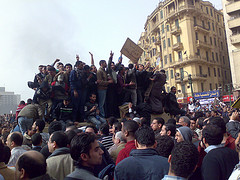
Egypt Narrative Promises a Long Unfolding

The story of the Egyptian demonstrations continues to unfold (photograph courtesy of Rami Raoof under Creative Commons license)

The story of the Egyptian demonstrations continues to unfold (photograph courtesy of Rami Raoof under Creative Commons license)

The current events unfolding in Cairo offer little in the way of narrative comfort. Instead, news commentators, analysts, even participants—weighing in breathlessly from the street on Twitter or Al Jazeera—seem struck by ambiguous meaning of events. Is looting spontaneous or sponsored by the Mubarak government to provoke requests for government protection? There are no clear successors to a Mubarak government, and no clear mechanism for a non-military succession. Why have the police abandoned the protests?

Continue reading

Posted in: Intercultural Communication, International Politics, Middle East, National Security, Political Analysis, War and Violent Conflict Tags: , , ,