
tag archive: European Union

Resilience Narratives Key to Resilient Systems

The 2013 World Economic Forum Conference that began today in Davos is dedicated this year to resilient dynamism. As Arianna Huffington noted earlier in the day, the key concept that gives rise to the need for resilience is our global interconnectedness. Quoting Rockefeller Foundation President Judith Rodin, she cites five attributes that resilient systems characteristically share:

  • Spare capacity
  • Flexibility — the ability to change, evolve, and adapt in the face of disaster.
  • Limited or “safe” failure, which prevents failures from rippling across systems.
  • Rapid rebound — the capacity to reestablish function and avoid long-term disruptions.
  • Constant learning, with robust feedback loops.

Huffington adds a sixth, “the will to want to be resilient.”

To that list, I feel we must add a seventh requirement for the present and future, Resilience Narratives: stories that will help disparate and potentially adversarial players see themselves as active participants in collaborative futures. Continue reading
Posted in: Conferences, Crisis Management, Decision making, Intercultural Communication, International Politics, Politics and Policy, Strategic Communication, Strategic Leadership Tags: , , , , , , , , , ,

Measuring National Power

Has the Eurozone crisis led to a loss of European Union power?

Washington D.C. was even more full of diplomatic cars and dark suited men than usual this weekend, as the the World Bank and International Monetary Fund held their annual spring meetings. Historically dedicated to shoring up ‘developing’ regions, this year’s focus was on the Eurozone crisis, that ongoing ripple of effects from the near financial collapse of several EU countries.

Some policy makers think that the EU’s loss of economic power will reduce its power on other issues, as the New York Times has reported: Continue reading

Posted in: Crisis Management, Decision making, International Politics, Marketing & Branding, National Security, Politics and Policy, Public Diplomacy, Public Relations Tags: , , , , , ,

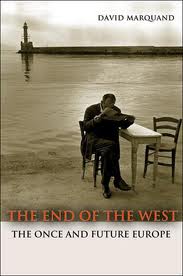
Review: “The End of the West: the Once and Future Europe”

English political theorist and former Labor Party MP David Marquand’s recently published The End of the West: the Once and Future Europe, comes at an opportune moment. The Greek financial crisis, U.S. jibes at NATO, and the suggestion by disgruntled British conservative party members that the UK quit the EU foretells a continental reckoning at hand.

Marquand’s thesis is that changing global circumstances press into relief both unresolved ambiguities that now must be resolved if the European Union is to continue as a viable institution. The creators of the European Community were eager to forge the organization, and to feel they were beginning to put the outrages of hyper-nationalism, in Nazism and fascism, and the ethnic hatreds exemplified by the Holocaust behind them. These terrible events stood in sharp contrast to the modern Western self-ideal: rational, egalitarian, and humanist, rather than racially minded, and the European Community was a way to return Europe to that better model of itself.

As a result of this fervor to move beyond the horrors of World War II, the founders of the European Community (later the European Union) never explored ambiguities regarding the implications of being “European.” These included complex issues of ethnic identity vis-à-vis national and European identity, the degree to which supranational governance would override the national sovereignty of member countries, and basic questions about geography—what are the territorial boundaries of Europe, and are they identical with some sort of defining quality of Europeanness? Continue reading

Posted in: Books & Films, International Politics, Middle East, Political Analysis, Politics and Policy, War and Violent Conflict Tags: , , , , , ,