tag archive: culture

Disruption Doesn’t Come from Where You Think It Does: A Practical Checklist of Sources of Disruptive Change

Increasingly, I find myself having conversations with colleagues or potential clients spending significant energy trying to get ahead of technological change, that is, to avoid disruption. This is good news. It means that more businesses are working their long-term planning muscles. They are beginning to think about what it takes to thrive in an era of quickly moving technological change. Take for example, these challenges:

  • An IT security company has developed a strong business in cloud-based malware and other solutions, and has been able to grow through the demands of governments for enterprise wide installations and consulting solutions. Yet the firm is wondering whether artificial intelligence / machine learning solutions may overtake their current business.
  • Military organizations of the United States, which have long enjoyed technological superiority over their adversaries, recognize that the democratization of innovation means they no longer hold a monopoly. How can they maintain their position in a world in which the barriers to sophisticated technological development have lowered and democratized?
  • A medical research firm has in hand a viable new treatment that could save lives, but which is based on a medical paradigm that may be upended on the basis of current basic research, and shift the playing field as dramatically as Uber has altered the taxi business.


The Virtues of Holistic Thinking

The chief question in these conversations is: How should we think about these kinds of challenges? Specialists and experts in these various fields typically want to think deeply and narrowly in order to solve problems. This makes great sense: deep expertise is the trait that led them success in the first place. Like race car drivers in a competition to a fixed point, they want to know whether their car could go faster, and whether it will go faster than their competitor’s.

But this narrow focus becomes less useful off the track, in the real world of the unpredictable future. Technology is surrounded and enabled by its complex, dynamic human context. Examples are everywhere of how additional factors play a meaningful role in how deeply and when change occurs:

  • Accidents and Black Swans (unpredictable, high impact events) can shape public attitudes in meaningful ways. The Three Mile Island nuclear power plant accident in 1979 and the 1986 explosion at Cherynobl affected public acceptance of nuclear power (although experts have come to different, and nuanced, conclusions about the degree of change in people’s attitudes). Accidents and the unexpected can also have a strong effect on the legislative environment as policy makers seek to respond to their constituencies.
  • Cultural shifts matter. The introduction of hand washing in the late 19th century into hospitals was partly a function of scientific discovery, but its widespread adoption by doctors had as much or more to do with making the practice a part of their culture and workday. Today, biometric means of identification at airports requires acceptance in the general population as well as regulation to function.
  • Innovations that make a difference alter the rules of the game—they shift paradigms and ask us to see the world differently than we have. Foreseeing potential change has as much to do with the way that you see the world as it does with what is happening in it.The United States and its Coalition partners were not able to respond effectively to the use of IED’s (improvised explosive devices) in the Iraq War because long standing assumptions that military strength stems from advanced technology blinded them to other strategic frameworks. Firms such as Uber and AirBnB disrupted transportation and hospitality by envisioning the relationship of producer (or owner of an asset) and consumer in a new and different way.
The Hand Washing innovation: Cultural attitudes toward hand washing, as well as at the discovery that disease could be spread through physical contact

Disrupting Surgical Practice: Doctor’s attitudes toward hand hygeine were as critical as scientific discovery in changing the ways they worked

A Practical Checklist of Sources of Disruptive Technological Change

If you are in a technology-centric environment, or giving deep thought these days to how transformations could change or upend your industry, it can be worthwhile to consider these additional factors and how they will wider environment in which you function. In exploring what may happen in the next five to ten years, you will need to consider the dynamism and changes that could occur in these realms. Like technology, they will not stand still but are also evolving. This is not a completely exhaustive list, but it should be a good start for broadening thinking about the factors in technological disruption in the marketplace:

  • Regulatory environment
  • Legal environment
  • Major institutions that will use the technology [e.g. Educational systems, manufacturers, medical systems and hospitals, governments, agriculture, etc.]
  • Political issues, political system
  • Direct competitors
  • Indirect competitors [is there anyone outside of your domain seeking to solve the same problem in a very different way?]
  • Marketing possibilities [what is the likelihood of marketing failure or success]
  • Accidents and unintended events that may have an impact
  • Ethics and values [does your technology raise ethical issues that society and government will have to grapple with?]
  • Culture and society [how will people greet the news of this technology or invention, what do they want]

As you consider the ways in which events and activities in these domains may affect the threshold for your success, you may also discover opportunities and possibilities for expanding your domain. Maybe you are the disrupter, not the disrupted.


Posted in: Decision making, Innovation, Marketing & Branding, Narrative and Cognition, Strategic Foresight Tags: , , , ,

Post-Boston: A More Effective Battle of Ideas (Part II)

Boston MarathonReprinted from The Globalist, April 24, 2013

Instead of getting sucked into heat-of-the-moment reactions to Boston, let’s base our responses on a more stable paradigm of contemporary global terrorism. To fight a battle of ideas successfully, one must first show what one is going up against. Amy Zalman makes the case that there are three distinct trends in terrorism — Hybrid, Multi-motivational and Narrative Terrorism.

This paradigm is evolving, but several trends are coming into view and are likely to deepen in the future:

  • Hybrid terrorism:

In traditional categorization of terrorists, there are “lone wolves” who are unconnected to any organized group and those who are members of organizations.

Today, a hybrid type appears to be evolving: someone who works without full organizational support or direction, but who is not working in total isolation from others. Continue reading

Posted in: Crisis Management, Intercultural Communication, International Politics, News and Journalism, Political Analysis, Politics and Policy, Strategic Leadership, War and Violent Conflict Tags: , , , , , , , , ,

The Need for a New Story: Faizullah Jan Compares Narratives of the U.S. Drone War in Waziristan

The narratives told in Pakistan and by international organizations about the secret U.S. drone war in Waziristan are so confused that “the people who are caught in the crosshairs of the war have lost their voice and their story to tell.” In this guest blog, reprinted from Dawn.com, Jan explains the issues.

Reprinted from Dawn.com

January 5, 2013 by Faizullah Jan

THERE are competing narratives about the US’s drone war in the Waziristan area, a bastion of militants. These narratives have so far failed to gain traction in the public, inside Pakistan and elsewhere.

The Pakistani narrative goes like this: the drone attacks are a violation of our national sovereignty. They kill innocent people, including women and children, as collateral damage and hence incite suicide attacks across the country in a cycle of reprisal and retaliation, thus killing more Pakistanis, which again includes women and children.

In short, suicide attacks on public places like markets — and even mosques and shrines — are provoked by drone attacks. If there are no drone attacks, there will be no suicide attacks in cities and towns. Continue reading

Posted in: Guest posts, Intercultural Communication, International Politics, National Security, News and Journalism, Political Analysis Tags: , , , ,

Narrative for Survival: My Grandmother’s Story

Stories can save lives. In One Thousand and One Nights, Sheherezade uses her storytelling talents to end King Shahrayr’s plot to punish his unfaithful wife by punishing all of the women of his kingdom. Having put to death the unfaithful Queen herself, the King embarks on a plan to marry a virgin of the Kingdom each night, and to have each killed at dawn. That is, until he marries Sheherezade, who spends her wedding night narrating to the King a most exciting and suspenseful tale. So exciting that the King puts off her death to hear how the story continues. And so their story continues for a thousand and one nights, after which the King abandons his goal to punish women, and marries Sheherezade.

My grandmother may not have had a thousand stories, but she had at least one, and telling it to an American Consul in 1939 saved her life and that of her husband and baby, when it permitted her to leave warring Europe on one of the last ships to cross the Atlantic. I had the opportunity to tell it at a local TedX event earlier this year, and was delighted when TEDx organizers chose it as one of their favorites. I’d love to hear about other stories that have saved lives, if you have one you’d like to share.

Posted in: Books & Films, Intercultural Communication, International Politics, Narrative forms, Politics and Policy, Popular Culture, War and Violent Conflict Tags: , , , , , , , , , ,

A Presidential Campaign, but No Presidential or National Narrative

A presidential campaign is an exercise in storytelling. Each candidate is always seeking to tell the most compelling story of the nation, one that both reflects who we think we are and projects into the future the kind of nation we’d like to be. The very occasion of campaign, with its promise of renewal, should be a strong backdrop for the symbols, themes, images and practices that tie past and future of a nation together.

This year, both Romney and Obama have struggled to find their foothold in a narrative that works. As the near tie in popularity makes clear, neither has a mandate, and neither has told a story with a powerful sense of forward momentum. Continue reading

Posted in: Narrative forms, Political Analysis, Politics and Policy, Strategic Leadership Tags: , , , , , , ,

High Powered Collaboration, a New Narrative for Leaders: an Interview with Kare Anderson

Kare Anderson Coaches Leaders to Get from "Me to We"

Kare Anderson has been a leader in communication in virtually every medium there is for over 30 years. She is an Emmy-winning former Wall Street Journal and NBC reporter, the author of a number of books about conflict resolution and collaboration in business, and publishes the online newsletters Moving from Me to We and Say it Better.

Kare’s most powerful communications though, come through in her coaching. She has led issue teams for the Obama 2008 campaign, advised CEOs, professional athletes, and cause advocates. All seek to have their story heard in highly competitive environments.

When we met recently, I immediately knew I’d like to interview Kare about how she uses narrative in her practice. In our few minutes on the phone last week, she offered concise wisdom and specific strategies for using collaborative techniques to achieve preferred outcomes—no small feat in a complex, noisy world.

AZ: How does storytelling and narrative play a role in your coaching?


KA
: For me one of the most difficult things is that people instinctively talk about themselves. When they’re standing on the stage talking to their employees, they talk about their company; they don’t talk about what’s in it for the employees. Many times when people are trying to tell their story they miss the biggest part, which is to construct it so it’s a purposeful narrative-so that the listener can see a role for themselves, want to jump in, retell it and play a role in it. When I think about storytelling, it is to understand what a person most stands for, what they want to get across and how they can authentically discuss it with someone elsewhere that person wants to jump in. The instinct is for people to ask a question and revert it back to themselves. Even when they want something from someone else. Continue reading

Posted in: Crisis Management, Decision making, Intercultural Communication, Narrative and Cognition, Public Relations, Strategic Leadership Tags: , , , , , ,

Afghanistan Narrative, Still Wrong, but Reparable

Earlier this month, Benjamin Hopkins and Magnus Marsden, authors of the forthcoming Fragments of the Afghan Frontier, argued strenuously in a New York Times Op Ed that the U.S. strategy in Afghanistan is as culturally inept as it was when we went to war a decade ago. The American obsession with viewing Afghanistan though the lens of tribal tradition is borrowed from 19th century Brits, whose understanding tribal mores was in large part composed of fanciful inventions of their own. Above all:

Afghanistan is not a country of primitive tribes cut off from the modern world. The singular focus on tribes, the Taliban, and ethnicity as the keys to understanding and resolving the conflict misses the nuances of the region’s past and present. Rather than fanatical tribesmen or poor victims in need of aid, many of these people are active and capable participants in a globalized economy.

http://navylive.dodlive.mil/index.php/2010/10/19/issues-of-the-veil/#disqus_thread

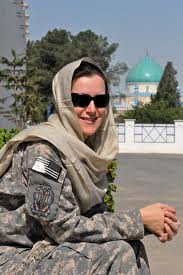
The U.S. military addresses cultural issues, even in how to dress**

Why does this profound institutional failure persist? I read it and hear versions of the premise that Afghans don’t live in the same globalized world as Americans all the time in defense contexts. The fact that it does persist should give us deep pause about how resources have been expended to create a more ‘culturally aware’ national security community. Continue reading

Posted in: Intercultural Communication, International Politics, Middle East, Narrative and Cognition, Narrative Research, National Security, Political Analysis, Politics and Policy, War and Violent Conflict Tags: , , , , , , , , ,

Communal Narrative on Parade at Annual West Indian American Day Carnival

In our social lives, narrative is not only something we tell but also something we perform. Public rituals like parades give us the chance to chronicle our communities in physical space and display the symbols and activities that define us. The words of George Fitch in Colliers Magazine in 1913, testifying to the popular pleasures of parades, are still true today.

The parade is an essential part of the American temperament. We not only inaugurate by parade, but we rejoice, mourn, commemorate, protest, inspire and argue by parades. Whenever two or three Americans are gathered together with a uniform within reach, they parade… The test of true brotherhood in any city is the willingness to parade in a white apron, a rooster feather hat, or a pair of baggy pink silk trousers.

Among the most joyous of these tests today is surely the annual West Indian American Day parade in Crown Heights, Brooklyn, an astonishing celebration of the colors, music and flavors of Carnival in the Caribbean, held this year on September 5, and an exuberant testament to multiculturalism. Continue reading

Posted in: Intercultural Communication, News and Journalism, Popular Culture Tags: , , ,

Narrative in Complex Decision Making: an Interview with Mary Crannell

Mary Crannell is one of those people whose broad intelligence and enthusiasm are hard to contain, as I learned when we met recently through a shared acquaintance. As the president of Idea Sciences, a decision-making support consultancy based in Alexandria, VA, Mary spends much of her time thinking about what technologies and processes will help her customers—such as the IMF, NATO, QinetiQ, the US Army, the UK Army, Verizon and Herman Miller, to name a few—arrive at good decisions. She is a frequent traveler to sites of conflict, as in a recent visit to Kabul, Afghanistan, where decision-making is an urgent, complex and ongoing task.

I was gratified when Mary agreed to share some of her thoughts on the role of narrative in decision-making generally, and in directing the American role in the world in productive directions, which is a concern many of her clients share.

Mary Crannell, President, Idea Sciences

AZ: How do you use narrative frameworks to help people make decisions?

MC: It is important to give people a way to define the vision of what they are trying to accomplish whether they are leading a state, a nation or an international organization. Is the system you are leading “on purpose?” We start with a vision. Continue reading

Posted in: Decision making, Information Systems, Intercultural Communication, International Politics, Middle East, Narrative Research, National Security, Public Diplomacy, Strategic Leadership, War and Violent Conflict Tags: , , , , , , , , , , ,

Review: “The End of the West: the Once and Future Europe”

English political theorist and former Labor Party MP David Marquand’s recently published The End of the West: the Once and Future Europe, comes at an opportune moment. The Greek financial crisis, U.S. jibes at NATO, and the suggestion by disgruntled British conservative party members that the UK quit the EU foretells a continental reckoning at hand.

Marquand’s thesis is that changing global circumstances press into relief both unresolved ambiguities that now must be resolved if the European Union is to continue as a viable institution. The creators of the European Community were eager to forge the organization, and to feel they were beginning to put the outrages of hyper-nationalism, in Nazism and fascism, and the ethnic hatreds exemplified by the Holocaust behind them. These terrible events stood in sharp contrast to the modern Western self-ideal: rational, egalitarian, and humanist, rather than racially minded, and the European Community was a way to return Europe to that better model of itself.

As a result of this fervor to move beyond the horrors of World War II, the founders of the European Community (later the European Union) never explored ambiguities regarding the implications of being “European.” These included complex issues of ethnic identity vis-à-vis national and European identity, the degree to which supranational governance would override the national sovereignty of member countries, and basic questions about geography—what are the territorial boundaries of Europe, and are they identical with some sort of defining quality of Europeanness? Continue reading

Posted in: Books & Films, International Politics, Middle East, Political Analysis, Politics and Policy, War and Violent Conflict Tags: , , , , , ,