
History belongs to the victors, it is said. But victors also arise because they have asserted interpretive control over their own history. Unlike most inheritances, the narrative that we inherit about who we are and what we are like is one that we have the ability to shape.
Powerful communicators understand that they have a meaningful degree of control over the way they interpret their legacy.
Legacy narratives are the stories that we have inherited that tell us who we are and our place in the world. No one is born without one — we are all born into something, a context, a country, into wealth or poverty, into a family that feels it once was great and has now fallen, or one that feels it is on the ascendent.
Institutions function the same way. The individuals who make them up enter them or lead them learn those narratives when they arrive on the scene. In fact, one of the ways that we become attached to institutions is by absorbing and championing their legacy identities. Companies, schools and universities, and national governments work hard to instill a sense of their legacy in their stakeholders.
When the conditions for success change, the legacy story may no longer be effective
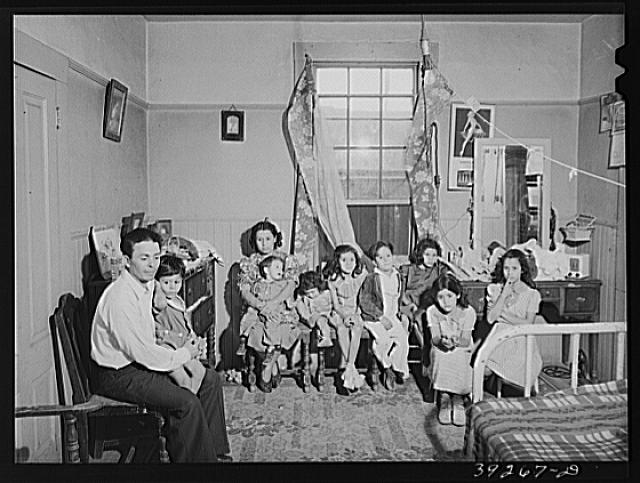
You can interpret your legacy-the story into which you were born-in ways that productively guide your future story.
Legacy stories serve as a touchpoint that helps us explain our current conditions and why we are successful (or failures).
When conditions change, however, the story may suddenly lose its explanatory power, pushing other institutional practices out of alignment.
Case Study: Structural Changes can displace a strong sense of legacy
In in the mid-2000s, I began work at a Fortune 500 company that had just gone from employee-owned to publicly owned. The shift from an employee owned company was a topic of big discussion. Some people had gotten wealthy in the shift, others not so much, but the more salient story was about the disappearance of a shared identity when employee ownership disappeared. People’s sense of who they were had disappeared.
The narrative that people had shared for many years about the firm was that it was a place where independent ideas and attitudes were valued, and where great ideas could find a home. This identity was wrapped up in employee ownership. And when that disappeared so did many people’s sense of loyalty and identification with the firm. In the ensuing years, while I was there, the transition was rocky. We went through several CEOs and multiple internal organization changes.
With greater attention to the symbolic narrative around employee ownership, the firm’s leadership could probably have smoothed that transition considerably. They could have communicated more effectively to employees how important values like independence of thought among employees would continue to be valued.
Case Study: Strong legacies can inhibit necessary changes
A strong sense of legacy can make it very difficult to initiate necessary changes. I saw this firsthand as the CEO of a global membership organization. It was fifty years old, was bleeding members and badly needed to change its ways and modernize. But it had a very powerful legacy story about ‘how things were done’ and ‘who we are’ that was maintained both internally by employees and externally through many of its members. They had helped to build the organization.
This legacy became a barrier, and it became my job to stitch the organization’s existing story to its potential future in a new way. I was fortunate to have advisors around me who helped me to communicate with those who were most afraid of change with more grace than I might have otherwise, and with respect for the important legacy of the organization.
Take Control of Your Legacy Story
The distinct quality of legacy stories is that they can seem static and unchangeable. You know that a legacy story is in operation when someone tells you “that is just the way we are” or that “this is how we have always done things.” The value of the legacy seems to grow as time goes on.
Legacy stories are like magnets that attract and repel— eventually everything that happens can seem to be either because of the central story or in spite of it. They get heavier. They get harder to move. They get harder to change. The story itself takes on the power of immovable fact.
But it doesn’t have to be this way.
Legacies are rewritten successfully when organizations or members of them start telling the story differently. This may be a grassroots effort or a conscious decision on the part of leaders.
A Quick Note about Ethics
One small but important note about ethics and integrity. Making up pasts out of whole cloth or lying about the past is not the route to lasting power and not what I am talking about here. Ethics and strength go hand-in-hand. People know when legacy stories are being stretched or when they are being told without integrity or respect for their basic facts. Within that ethical band, though, we have room to create from the ingredients of our inherited stories, those that will guide our intentions and communicate our values going forward.
What is Your Legacy Story? Is it Hurting or Helping your Ambitions?
Do you have a legacy story that is holding you or your organization back? Here are a few questions to ask to help clarify:
- What are our legacy stories?
- How do we use our legacy story? Do we use it to perpetuate the status quo or to mobilize change?
- What are the forgotten parts of our legacy? Are any of those usefully revived in order for us to reinvent ourselves?
- Are there values or activities that we are interested in pursuing in the future? How can we link our legacy to new initiatives in ways that fortify and support our new directions, and that help explain to outsiders what we are doing?
- What are the key moments or events that seem to illuminate the theme of the legacy story? Are there other moments, or events or even representative figures who should be brought in in order to begin shifting the story?
- Legacy stories are often told in legacy syntax, using habitual turns of phrase. What happens if you retell the story in a different way and what does it illuminate?
If you have comments about legacy stories or questions, I’d welcome hearing from you. You can reach me at [email protected] or via the contact form here.
 Vampire stories helped explain death in the 19th century