
category archive: Politics and Policy

Egypt Uprising Narrative as Youth, New Media Driven: Wrong

Ala' 'Abd al Fatah (image courtesy of Wikimedia and Manalaa.net under Creative Commons license)

NPR’s Michele Norris interviewed Egyptian blogger and software Ala’ ‘Abd Al Fattah on June 6 about his role and perceptions of the uprising in Egypt that brought down the Mubarak regime earlier this spring. Among Al Fattah’s insights: the narrative of events in Egypt as a primarily youth led and Internet driven and urban are incorrect. As he notes: “by that exclusion you also exclude a very big aspect of what it is about.”

NORRIS: You’re here in this country in part to describe what happened in Egypt. Are there things that happened there that people don’t well understand? Here, when there are large uprisings or large news events like this, a popular narrative takes hold and sometimes it’s correct and sometimes it’s not completely correct.

Mr. AL FATTAH: I think a lot of it is misunderstood and misrepresented in both internationally and even locally from the framing of this as an Internet-led revolution to a framing that it’s a youth revolution. All of that is based on the aspects of reality, but it excludes the majority of the people who participated in the revolution.

And by that exclusion, you also exclude a very big aspect of what it is about. And also, there’s a lot of focus on Tahrir while you had the majority of the revolution was happening outside of Cairo. And some of its most amazing stories were in - there were six towns that were completely autonomous after the third day of the uprising, and people had to manage the cities and had to organize themselves to keep the cities functioning. And that experience is amazing, and it’s not really being discussed.

Two important questions flow from al Fattah’s interesting observations. One is about what is left out of the popular narrative of the uprising as high tech and youth driven. And the second question is why? What is the function of the high tech narrative?

One kind of answer is supplied by Mona el-Ghobashy. Writing in Middle East Report earlier this spring, the Barnard political science professor outlines “the reality … that Egyptians had been practicing collective action for at least a decade” preceding the 2011 events, although their increasing political sophistication was repeatedly characterized as the effect of economic pain Egyptian officials. While social media and mobile phones enabled the synchronization of protests on January 25, it was this ‘invisible’ history that shaped a people capable of such effective demonstrations they toppled a police regime.

As for why the high tech, youth driven narrative holds such sway in Western media: To a degree it reflects a kind of vanity we hold about ourselves. In the United States, in particular, it is hard for us to imagine political sophistication in parts of the world we do not know well, or what it looks like. So we imagine revolutions in the image of ourselves we like best: as an eternally young (vis-a-vis Europe) country whose technologies have enabled and inspired the rest of the world. In one version of the Egyptian uprising, we see a satisfying reflection of the kind of revolution we would have liked to inspire.
Posted in: Intercultural Communication, International Politics, Middle East, Political Analysis, Politics and Policy, War and Violent Conflict Tags: , , , , , ,

U.S. Should Stop Asking if “They Like Us”

The September 11 attacks spawned a public mania in the United States for uncovering whether people in other parts of the world “like us,” and if not, understand why they “hate us.” Ten years later, the U.S. State Department and, more broadly, national security community is still using this uninformative metric.

It is time to break down what the question “do you like the United States” actually means to those who we ask —whether directly through polling, or through the interpretation of symbolic actions (signs, flag burning) or the aggregation of media statements, or in any other fashion.

Most people in the world, especially those of greatest strategic interest to the U.S., cannot answer whether they like the United States based on personal information or knowledge. Despite rising international travel to the United States, most of the 60 million foreign visitors last year came from just five countries: Canada, Mexico, the UK, Japan and Germany.

The number of those who can answer based on a sense of intellectual or cultural proximity is equally small. The common wisdom since World War II is that American popular culture—movies, television shows, McDonald’s—is loved abroad, even when American policies are not. Globalization encourages competition and hybridization of cultural forms. Economics professor Tyler Cowan has argued that the “21st century will bring a broad mélange of influences, with no clear world cultural leader.” Continue reading

Posted in: Intercultural Communication, International Politics, Middle East, National Security, Politics and Policy, Public Diplomacy Tags: , , , , ,

The Psychology of Conspiracy Theorists

Conspiracy Theories are Narratives on Steroids

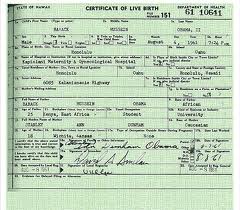
President Obama's Birth Certificate Doesn't Quell Conspiracy Theory that He Isn't an American Citizen

Conspiracy theories are narratives on steroids. In a story, the plot moves forward when one thing causes the next. In a conspiracy theory, cause is an outsized malignant force that knows everything and controls all events. Nothing happens randomly, all events are tied to the larger purpose of an always mysterious, always malefic agent. The amplification of current events into objects of global scrutiny also amplifies conspiracy theories, making them powerful agents in shifting public opinion. Thus with the so-called Birthers framing of President Obama as a foreigner, despite the overt presentation of facts proving that the president was born in the American state, Hawaii.

Conspiracy theorists stubbornly resist the facts at hand, finding reasons other than those given for why events unfold the way they do. Many Pakistanis appear to doubt that Osama bin Laden died as reported in mainstream news. According to a Gallup poll, “nearly half (49%) thought that the whole incident was actually staged for some reason or other. Only 26% thought the al-Qaeda chief was really killed on the night in question.” That’s a lot of people who think that the story circulated in mainstream media is crackpot, at best. And this week, 57% of respondents to a French poll believe that Dominique Strauss-Kahn is the victim of a conspiratorial plot by political rivals, rather than the victimizer of a hotel housemaid, as has been reported. Continue reading

Posted in: Books & Films, Conspiracy Theories, International Politics, Narrative Research, Politics and Policy, Popular Culture Tags: , , , , , , , ,

NY Times tells the Story of the Story of Obama’s Mideast Speech

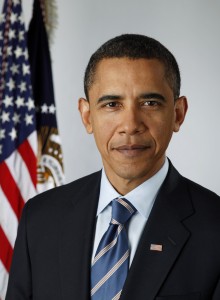
Official_portrait_of_Barack_Obama

The degree to which communication’s globalization has changed the way we think and talk about the news is evident in today’s reporting on Obama’s Middle East speech. Once upon a time, communication-via newspaper, radio, what have you—was considered a transparent vehicle conveying to readers and listeners what was happening on the ground.

Not so any longer. Now we are in full postmodern swing and “the news” highlights not only things that happen in the world (like presidential speeches), but how they are worded, and who these words are supposed to impact, and how different audiences may interpret what is said. The fact is that these elements of communication always mattered, but the speed and visibility of our interactions with those elements has helped press into relief the degree to which they play a part in how events themselves (like peace talks, political decisions, elections, wars) unfold. All of this made the concept of narrative more important—narrative is the elements of communication in action, all working together on a jointly constructed story of events unfolding in real time, and it also the interplay of that construction with events themselves. Continue reading

Posted in: International Politics, Middle East, National Security, Political Analysis, Politics and Policy Tags: , , , ,

Body Scanners Expand the State’s Boundaries

bodd scanner

The recent flap over the TSA security measures –both manual pat-downs and backscatter x-ray and millimeter wave scanners—has been painted as presenting a conflict between personal privacy and national security.

We might more accurately call it a conflict over boundaries, personal and national. Who has the right to cross what borders? What is the proper boundary between my body and the state?

This trope, which is also present in other conflicts, like that over abortion, is particularly apt in a battle against terrorism. Boundaries, after all, are precisely what terrorists violate. Violent actors’ capacity to terrorize originates in their readiness to transgress both physical and moral boundaries. The more flagrant the violation, the more terrified we become. Terrorists do not obey the agreed on boundaries of sovereign states, nor those that we—the global community—have sanctioned to regulate war: we draw boundaries between just causes for war and unreasonable ones and, crucially, between combatants and civilians. The line between combatant and civilian in war is sacrosanct to most of us; on one side, we go toward injury, on the other, we are to be protected from it.

Perhaps it is the nature of this particular conflict that has led to a peculiar focus by the United States on bodies and boundaries, an intersection that is often shadowed by the erotic, whether for good or ill.

There is the ongoing confusion over whether others are combatants are civilians. We do not know where to draw the line. If you were an Afghan, or even a non-Afghan, in the orbit of Al Qaeda in 2001, did that make you a terrorist? Continue reading

Posted in: National Security, Politics and Policy, War and Violent Conflict Tags: , , , , ,