category archive: Politics and Policy

Measuring National Power

Has the Eurozone crisis led to a loss of European Union power?

Washington D.C. was even more full of diplomatic cars and dark suited men than usual this weekend, as the the World Bank and International Monetary Fund held their annual spring meetings. Historically dedicated to shoring up ‘developing’ regions, this year’s focus was on the Eurozone crisis, that ongoing ripple of effects from the near financial collapse of several EU countries.

Some policy makers think that the EU’s loss of economic power will reduce its power on other issues, as the New York Times has reported: Continue reading

Posted in: Crisis Management, Decision making, International Politics, Marketing & Branding, National Security, Politics and Policy, Public Diplomacy, Public Relations Tags: , , , , , ,

“Stand your Ground” Laws Validate Stories of Lethal Force, Silence Others

Yale Law School professor Adam Cohen, advocating the repeal of the Stand Your Ground law that permitted George Zimmerman to claim he killed Trayvon Martin in self defense, wrote in Time Magazine last week that:

If Zimmerman does go to trial, there will no doubt be enormous debates over his guilt or innocence. It is difficult to sort out motives and right and wrong in cases of this sort — especially when one of the critical witnesses, young Mr. Martin, cannot testify about what happened.

There is a direct link between Stand Your Ground laws, which permit those with access to deadly force to use it if they feel threatened, and Martin’s inability to tell his story.

Spirit of JusticeSpirit of Justice, cropped from photograph: Two sculptures "Spirit of Justice," and "Majesty of Justice," Great Hall, 2nd floor, Department of Justice, Washington, D.C.

It is a truism when talking about narrative and public life to assert that some stories are sanctioned, and others silenced. Sometimes it is difficult to identify the mechanism through which such sanction takes place, because it lies in community tradition or social discourse. Stand Your Ground laws press into relief how law can shape which accounts will be viewed as legitimate before they are evaluated by judges and juries. Under the Stand your Ground premise, might makes right. Your ability to lethally harm someone is converted into the credible motivation for doing so, while the victim of a killing is doubly silenced, in court and in life.

When I consider the reported details of the case in the press-the accounts of Zimmerman and his father, the 911 call transcripts, the reports of the neighbors and Martin’s girlfriend, who overheard the encounter by cell phone, I hear a story of two young men who each experienced sensations of threat and fear in the presence of the other. Continue reading

Posted in: Legal Issues, Narrative forms, Narrative Research, News and Journalism, Politics and Policy Tags: , , , , , , ,

The Definition of Strategic Narrative: an Evolving Concept in International Affairs

In an earlier post, I outlined ways in which the term strategic narrative is used in current practice, in public relations—as an element of marketing—and in the academic field of international relations. This post returns to the evolution of the term as an applied concept in foreign affairs.

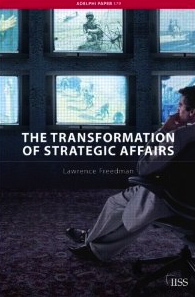
According to International Relations professor Alister Miskimmon (who I asked by email), the first published use of the term “strategic narrative” was by Lawrence Freedman, a professor of War Studies at King’s College, London. In 2006, Freedman wrote a paper called The Transformation of Strategic Affairs. Many of the insights in Freedman’s work stem from the Western experience of war in the post-9/11 years, and the discovery—the hard way, through experience—that the era of large scale land warfare may be decisively over. In its place, the future promises smaller wars, waged by insurgents as well as governments, in which human factors such as behavior, culture and communication play meaningful roles.

In this context, Freedman identifies “strategic narratives” as a kind of secret weapon of networked combatants fighting irregular wars. In Freedman’s view, a story that connects people emotionally to an identity and a mission “helps dispersed groups to cohere and guides its strategy. Individuals know the sort of action expected of them and the message to be conveyed.”

Thus, in Freedman’s definition, narrative is a function of strategy in the most traditional sense related to the science of war. In that vein, he argues that: Continue reading

Posted in: International Politics, Middle East, Narrative Research, National Security, Politics and Policy, War and Violent Conflict Tags: , , , , , , , , , , , ,

Behavioral Economics Go to War

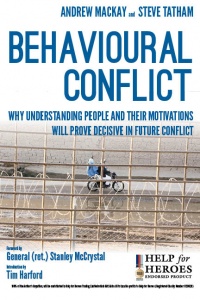
Review of Behavioural Conflict, Why Understanding People and their Motivations Will Prove Decisive in Future Conflict, by Andrew Mackey and Steve Tatham

I cannot think of any books about warfare’s future that come across as hard-hitting, full of actionable pragmatism, and deeply humane all at the same time. But Behavioral Conflict: Why Understanding People and their Motivations will Prove Decisive in Future Conflict is all three. The authors, both career members of the British military, Major General Andres Mackey (Ret) and Royal Navy Commander Steve Tatham (who I count as a friend, having met him in Ankara a few years ago), make their case by drawing on a combination of their own experience, case studies and close analysis of how communication actually factors in war.

Hard-hitting and pragmatic: Mackey and Tatham are precise and lucid about what they mean by “behavior” and how to make use of it to gain advantage in conflict. They, and behavioral psychologist Lee Rowland, who adds a chapter on the science of influence, are not putting forth any of the following: A call for greater “cultural awareness,” a mushy program about how to change others’ attitudes, or a repeat of the last decade’s focus on consumer marketing as the key to public diplomacy. They offer instead this thesis based on a simple chain of claims:

  • The world of human motivation and perception is inevitably complex.
  • It is more important to try to shape behavior than it is to change people’s attitudes.
  • Behavior shaping begins with a discrete grasp of the circumstances under which people already behave in ways that are desirable, and extends to efforts to replicate those or similar circumstances. Continue reading

Posted in: Books & Films, Decision making, Intercultural Communication, International Politics, Narrative Research, National Security, Politics and Policy, Strategic Leadership, War and Violent Conflict Tags: , , , , , , , , , , , , , , ,

2011: Year of the Protest Narrative

E.M. Forster famously distinguished events that are yoked only by their temporal order from those that we would consider a narrative (which he called “plot”), in which events are causally linked, with this pithy comparison:

1. The King died and then the Queen died (2 events tied only by temporal order)

2. The King died and then the Queen died of grief (the second event is caused by the first)

I’ve had this distinction on my mind as year-end wrap-ups circulate in the media.

photographer: David Shankbone

Protestors on Wall Street, September 30, 2011

The global scope of economic crisis and dramatic protests give commentators a lot of latitude to tell the story of this year in a variety of ways. Did Mohamed Bouazizi’s galvanizing protest by fire, and the subsequent fall of the Tunisian government cause Egyptian protests? And did these, in some way cause Occupy Wall Street? Do the protests in Chile, Tel Aviv and Russia have anything to do with each other, or with others? Continue reading

Posted in: Intercultural Communication, International Politics, Middle East, Politics and Policy, Popular Culture Tags: , , , ,

Announcement: U.S. State Department Strategic Narratives Public Meeting

At the RAND Corporation in Santa Monica, CA, November 29

From the State Department Announcement:

The U.S. Advisory Commission on Public Diplomacy will hold a public meeting on the topic of strategic narratives November 29, 2011, in Santa Monica, CA, in partnership with the RAND Corporation. The meeting will take place at the RAND offices at 1776 Main Street in Santa Monica, CA, in the Forum Auditorium. It will begin at 9:00 am and end at 3:00 p.m. with doors open for registration and continental breakfast at 8:30 a.m. The event will be webcast live and will emphasize open-forum question and response periods with the audience.

To attend, contact the RAND Corporation no later than November 21 by phone at (412)683-2300 ext 4906 or email to maria_falvo@rand.org and provide your full name, citizenship (U.S. citizenship is not required to attend), and institutional/organizational affiliation. Continue reading

Posted in: Conferences, Narrative Research, National Security, Politics and Policy, Public Diplomacy, War and Violent Conflict Tags: , , , , , , , , ,

Afghanistan Narrative, Still Wrong, but Reparable

Earlier this month, Benjamin Hopkins and Magnus Marsden, authors of the forthcoming Fragments of the Afghan Frontier, argued strenuously in a New York Times Op Ed that the U.S. strategy in Afghanistan is as culturally inept as it was when we went to war a decade ago. The American obsession with viewing Afghanistan though the lens of tribal tradition is borrowed from 19th century Brits, whose understanding tribal mores was in large part composed of fanciful inventions of their own. Above all:

Afghanistan is not a country of primitive tribes cut off from the modern world. The singular focus on tribes, the Taliban, and ethnicity as the keys to understanding and resolving the conflict misses the nuances of the region’s past and present. Rather than fanatical tribesmen or poor victims in need of aid, many of these people are active and capable participants in a globalized economy.

http://navylive.dodlive.mil/index.php/2010/10/19/issues-of-the-veil/#disqus_thread

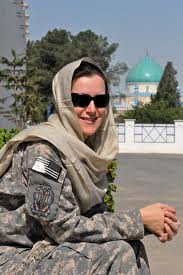
The U.S. military addresses cultural issues, even in how to dress**

Why does this profound institutional failure persist? I read it and hear versions of the premise that Afghans don’t live in the same globalized world as Americans all the time in defense contexts. The fact that it does persist should give us deep pause about how resources have been expended to create a more ‘culturally aware’ national security community. Continue reading

Posted in: Intercultural Communication, International Politics, Middle East, Narrative and Cognition, Narrative Research, National Security, Political Analysis, Politics and Policy, War and Violent Conflict Tags: , , , , , , , , ,

Lessons in Patriotism

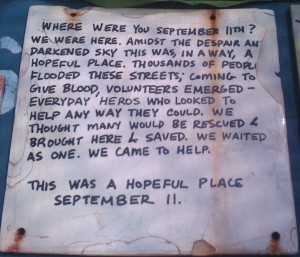
Tile made as part of a project that let people create their own commemorative tiles in 2001; they were later hung on a chain link fence in New York City's Greenwich Village (photo A. Zalman)

Patriotism—love of one’s country—is a treacherous emotion. Too little of it, and we aren’t motivated to make necessary sacrifices on behalf of our national brothers and sisters. Too much of it, or too much of the wrong sort, and exclusionary nationalism—in the form of various ethnic and religious hatreds- takes over. The challenges of getting patriotism right people think that we should avoid these dangers and keep emotion out of our public lives, substituting instead our critical faculties to reason our way to being fair and kind to each other.

But, as philosopher Martha Nussbaum argues, we require this form of love, “distinct from simple approval, or commitment or embrace of principles” in order to act on behalf of people we have never met—those people invoked by the idea of nation. Continue reading

Posted in: Intercultural Communication, National Security, Politics and Policy, War and Violent Conflict Tags: , , , , , , , , , ,

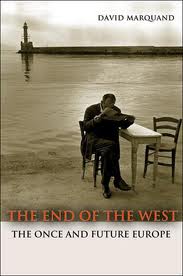
Review: “The End of the West: the Once and Future Europe”

English political theorist and former Labor Party MP David Marquand’s recently published The End of the West: the Once and Future Europe, comes at an opportune moment. The Greek financial crisis, U.S. jibes at NATO, and the suggestion by disgruntled British conservative party members that the UK quit the EU foretells a continental reckoning at hand.

Marquand’s thesis is that changing global circumstances press into relief both unresolved ambiguities that now must be resolved if the European Union is to continue as a viable institution. The creators of the European Community were eager to forge the organization, and to feel they were beginning to put the outrages of hyper-nationalism, in Nazism and fascism, and the ethnic hatreds exemplified by the Holocaust behind them. These terrible events stood in sharp contrast to the modern Western self-ideal: rational, egalitarian, and humanist, rather than racially minded, and the European Community was a way to return Europe to that better model of itself.

As a result of this fervor to move beyond the horrors of World War II, the founders of the European Community (later the European Union) never explored ambiguities regarding the implications of being “European.” These included complex issues of ethnic identity vis-à-vis national and European identity, the degree to which supranational governance would override the national sovereignty of member countries, and basic questions about geography—what are the territorial boundaries of Europe, and are they identical with some sort of defining quality of Europeanness? Continue reading

Posted in: Books & Films, International Politics, Middle East, Political Analysis, Politics and Policy, War and Violent Conflict Tags: , , , , , ,

5 Points about Using Numbers in Narrative

random-colored-numbers-480x309

1. Numbers and Narratives: Frenemies

We want to sort story from statistic. Story can seem to be spin, while numbers appear to speak for themselves and reflect an unimpeachable reality. Our insistence that what is “social be “science” makes us think that numbers can stand in for reasoning and context to explain the world around us. Yet, we also don’t understand statistics very well, which makes most of us easy victims of numbers that only seem to mean something, when they’re cushily framed by persuasive stories. But it wasn’t always so, recounts Roberto Franzosi in From Words to Numbers. Consider:

…the etymological roots of the words “count” (numbers) and “recount,” as in narrative or tell a story (words). The word “recount” was imported into English from the French reconter in the fifteenth centry. In French, the verb reconter, a close proxy of conter, hasd been adopted in the twelfth century from the Latin computare (meaning reckon and calculate). And computare (meaning reckon and calculate). And numbers, telling and measuring, counting and recounting, were once simply intellectual activities, involved thinking, or, more appropriately, enumerating or going through a sequential list.

Here then, a short list of ways to bridge the historical divide, and reunite narrative and number.

2. Frameworks Institute: “Don’t fight the narrative with numbers”

According to Frameworks, which helps institutions shape discourse around social issues, numbers and facts are not persuasive to people, if the cited numbers counter strongly held worldviews.

The fact is that many Americans find it hard to digest data and interpret it; mathematical literacy is a major hurdle. But, that aside, the psyche is often resistant to data that erode a comfortable view of the world. Quite often, the numbers are reinterpreted to substantiate an entirely different conclusion. From the social science roots of framing research we learn this maxim: If the facts don’t fit the frame, the facts get rejected not the frame.

New numbers won’t fix an outworn frame, is the message. Continue reading

Posted in: Books & Films, Narrative and Cognition, Narrative Research, Politics and Policy Tags: , , ,