Instead of getting sucked into heat-of-the-moment reactions to Boston, let’s base our responses on a more stable paradigm of contemporary global terrorism. To fight a battle of ideas successfully, one must first show what one is going up against. Amy Zalman makes the case that there are three distinct trends in terrorism — Hybrid, Multi-motivational and Narrative Terrorism.
This paradigm is evolving, but several trends are coming into view and are likely to deepen in the future:
Hybrid terrorism:
In traditional categorization of terrorists, there are “lone wolves” who are unconnected to any organized group and those who are members of organizations.
Today, a hybrid type appears to be evolving: someone who works without full organizational support or direction, but who is not working in total isolation from others. Continue reading
The Boston Marathon bombings provide an opportunity for the United States to consider how to combat extremist ideas more effectively than it did a decade ago. But this is not the time to let fear and uncertainty drive us into misguided and — as importantly — ineffective forms of countering violent extremism.
Warning: Prominent policy makers are already making demands to disinter the discredited concepts of the Global War on Terror. Options presented range from designating the bombers enemy combatants to calling for sweeping surveillance of majority Muslim communities.
The motivations that led Tamerlan and Dzhokar Tsarnaev to set off lethal bombs at the Boston Marathon last week may not yet be clear. But the characteristics of that event already tell us a substantial amount about the direction of 21st century terrorism — and how we might combat it with increasing effectiveness. Continue reading
The narratives told in Pakistan and by international organizations about the secret U.S. drone war in Waziristan are so confused that “the people who are caught in the crosshairs of the war have lost their voice and their story to tell.” In this guest blog, reprinted from Dawn.com, Jan explains the issues.
THERE are competing narratives about the US’s drone war in the Waziristan area, a bastion of militants. These narratives have so far failed to gain traction in the public, inside Pakistan and elsewhere.
The Pakistani narrative goes like this: the drone attacks are a violation of our national sovereignty. They kill innocent people, including women and children, as collateral damage and hence incite suicide attacks across the country in a cycle of reprisal and retaliation, thus killing more Pakistanis, which again includes women and children.
In short, suicide attacks on public places like markets — and even mosques and shrines — are provoked by drone attacks. If there are no drone attacks, there will be no suicide attacks in cities and towns. Continue reading
A presidential campaign is an exercise in storytelling. Each candidate is always seeking to tell the most compelling story of the nation, one that both reflects who we think we are and projects into the future the kind of nation we’d like to be. The very occasion of campaign, with its promise of renewal, should be a strong backdrop for the symbols, themes, images and practices that tie past and future of a nation together.
This year, both Romney and Obama have struggled to find their foothold in a narrative that works. As the near tie in popularity makes clear, neither has a mandate, and neither has told a story with a powerful sense of forward momentum. Continue reading
We live in stories. That is, we are always in the process of trying to make sense of what is happening to us and around us. That process drives us – to vote, to go into the street and fight for a nation, to make changes in how we consume, or to do none of the above.
Political leadership that understands that stories, perceptions, values, ideas, culture are present wherever there is human activity have a powerful tool for understanding what drives both change and apathy.
There is no name more firmly associated with linking political power and values and ideas than that of Joseph Nye. He coined the term soft power, which is power that stems from the intangible sources such as “institutions, ideas, values, culture …” as he explains in The Future of Power.
Earlier this week, The Globalist published my article, How Power Really Works in the 21st Century: Beyond Soft, Hard and Smart. In it, I explain how, in a networked, information driven age, the power of symbols and ideas is always an important part of the strategic landscape. Nye’s insight that culture, ideas, perceptions, stories has been deeply assimilated into strategic thinking—a great tribute to him. But the insight has outgrown the categories that once described them. Continue reading
Earlier this month, Benjamin Hopkins and Magnus Marsden, authors of the forthcoming Fragments of the Afghan Frontier, argued strenuously in a New York Times Op Ed that the U.S. strategy in Afghanistan is as culturally inept as it was when we went to war a decade ago. The American obsession with viewing Afghanistan though the lens of tribal tradition is borrowed from 19th century Brits, whose understanding tribal mores was in large part composed of fanciful inventions of their own. Above all:
Afghanistan is not a country of primitive tribes cut off from the modern world. The singular focus on tribes, the Taliban, and ethnicity as the keys to understanding and resolving the conflict misses the nuances of the region’s past and present. Rather than fanatical tribesmen or poor victims in need of aid, many of these people are active and capable participants in a globalized economy.
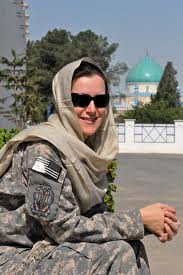
The U.S. military addresses cultural issues, even in how to dress**
Why does this profound institutional failure persist? I read it and hear versions of the premise that Afghans don’t live in the same globalized world as Americans all the time in defense contexts. The fact that it does persist should give us deep pause about how resources have been expended to create a more ‘culturally aware’ national security community. Continue reading
The competing narrative continuing to unfold about the ongoing violence in Syria reflect how completely amateur video has now transformed our understanding of what “news” is. Activists’ homemade videos have shattered the idea that the Syrian government’s claim to be restoring “stability” to towns under attack from “armed terrorists” can be taken at face value.
Yet, amateur videos cannot be verified easily, and for that reason also cannot be taken at face value. In order to try to tell the “whole” story, Reuters, CNN and other mainstream sources seem to be frequently reduced to a version of stuttering about how, although they are showing citizen footage, they can’t vouch for it’s accuracy. The New Yorker, commenting on an August 5th video below, notes that, “Like all of the amateur videos coming out of Syria, where the foreign press has been banned, this footage has not been independently verified.”
Other journalists, like Dissected News founder James Miller, are rewriting the terms of journalistic objectivity to try to make sense of, and verify, amateur video claims. Like traditional journalism, this new form requires a zealous desire get the story right and the passion-and knowledge of context-to uncover truth. But it also requires the talents of a film critic—the ability to read images, to interrogate pictures for what they reveal and conceal, and to explore how they are constructed.
As it turns out, a picture is not worth a thousand words at all. A picture is just like words – it may tell the truth, it may deceive, but it is never the transparent conduit to fact we once thought it was. It is up to good journalists to decipher them, and learn to read them as they do sources’ statements: as complex, layered signals that say as much about the worldview of the people making them, as they do about events at hand.
… Some news agencies have occasionally been duped by propaganda promoted by individual “activists”, but those observers who are more tuned in, after months of experience, to the claims of the activists, now know which individuals or groups produce credible information, and they know when to be extra-skeptical about reports. However, many of these claims are reliable, and the media who drop in on the Syria story need to pay attention to the journalists who are working hard to separate the “good” reports from the “bad”. Because in Syria — to take a position — one side is lying, one side is mostly truthful, and thousands of lives are in the balance of the two.
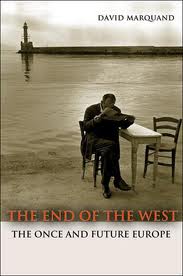
Marquand’s thesis is that changing global circumstances press into relief both unresolved ambiguities that now must be resolved if the European Union is to continue as a viable institution. The creators of the European Community were eager to forge the organization, and to feel they were beginning to put the outrages of hyper-nationalism, in Nazism and fascism, and the ethnic hatreds exemplified by the Holocaust behind them. These terrible events stood in sharp contrast to the modern Western self-ideal: rational, egalitarian, and humanist, rather than racially minded, and the European Community was a way to return Europe to that better model of itself.
As a result of this fervor to move beyond the horrors of World War II, the founders of the European Community (later the European Union) never explored ambiguities regarding the implications of being “European.” These included complex issues of ethnic identity vis-à-vis national and European identity, the degree to which supranational governance would override the national sovereignty of member countries, and basic questions about geography—what are the territorial boundaries of Europe, and are they identical with some sort of defining quality of Europeanness? Continue reading
Ala' 'Abd al Fatah (image courtesy of Wikimedia and Manalaa.net under Creative Commons license)
NPR’s Michele Norris interviewed Egyptian blogger and software Ala’ ‘Abd Al Fattah on June 6 about his role and perceptions of the uprising in Egypt that brought down the Mubarak regime earlier this spring. Among Al Fattah’s insights: the narrative of events in Egypt as a primarily youth led and Internet driven and urban are incorrect. As he notes: “by that exclusion you also exclude a very big aspect of what it is about.”
NORRIS: You’re here in this country in part to describe what happened in Egypt. Are there things that happened there that people don’t well understand? Here, when there are large uprisings or large news events like this, a popular narrative takes hold and sometimes it’s correct and sometimes it’s not completely correct.
Mr. AL FATTAH: I think a lot of it is misunderstood and misrepresented in both internationally and even locally from the framing of this as an Internet-led revolution to a framing that it’s a youth revolution. All of that is based on the aspects of reality, but it excludes the majority of the people who participated in the revolution.
And by that exclusion, you also exclude a very big aspect of what it is about. And also, there’s a lot of focus on Tahrir while you had the majority of the revolution was happening outside of Cairo. And some of its most amazing stories were in - there were six towns that were completely autonomous after the third day of the uprising, and people had to manage the cities and had to organize themselves to keep the cities functioning. And that experience is amazing, and it’s not really being discussed.
Two important questions flow from al Fattah’s interesting observations. One is about what is left out of the popular narrative of the uprising as high tech and youth driven. And the second question is why? What is the function of the high tech narrative?
One kind of answer is supplied by Mona el-Ghobashy. Writing in Middle East Report earlier this spring, the Barnard political science professor outlines “the reality … that Egyptians had been practicing collective action for at least a decade” preceding the 2011 events, although their increasing political sophistication was repeatedly characterized as the effect of economic pain Egyptian officials. While social media and mobile phones enabled the synchronization of protests on January 25, it was this ‘invisible’ history that shaped a people capable of such effective demonstrations they toppled a police regime.
As for why the high tech, youth driven narrative holds such sway in Western media: To a degree it reflects a kind of vanity we hold about ourselves. In the United States, in particular, it is hard for us to imagine political sophistication in parts of the world we do not know well, or what it looks like. So we imagine revolutions in the image of ourselves we like best: as an eternally young (vis-a-vis Europe) country whose technologies have enabled and inspired the rest of the world. In one version of the Egyptian uprising, we see a satisfying reflection of the kind of revolution we would have liked to inspire.
The degree to which communication’s globalization has changed the way we think and talk about the news is evident in today’s reporting on Obama’s Middle East speech. Once upon a time, communication-via newspaper, radio, what have you—was considered a transparent vehicle conveying to readers and listeners what was happening on the ground.
Not so any longer. Now we are in full postmodern swing and “the news” highlights not only things that happen in the world (like presidential speeches), but how they are worded, and who these words are supposed to impact, and how different audiences may interpret what is said. The fact is that these elements of communication always mattered, but the speed and visibility of our interactions with those elements has helped press into relief the degree to which they play a part in how events themselves (like peace talks, political decisions, elections, wars) unfold. All of this made the concept of narrative more important—narrative is the elements of communication in action, all working together on a jointly constructed story of events unfolding in real time, and it also the interplay of that construction with events themselves. Continue reading

 Reprinted from The Globalist, April 24, 2013