category archive: National Security

Behavioral Economics Go to War

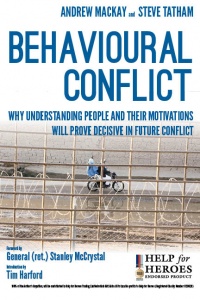
Review of Behavioural Conflict, Why Understanding People and their Motivations Will Prove Decisive in Future Conflict, by Andrew Mackey and Steve Tatham

I cannot think of any books about warfare’s future that come across as hard-hitting, full of actionable pragmatism, and deeply humane all at the same time. But Behavioral Conflict: Why Understanding People and their Motivations will Prove Decisive in Future Conflict is all three. The authors, both career members of the British military, Major General Andres Mackey (Ret) and Royal Navy Commander Steve Tatham (who I count as a friend, having met him in Ankara a few years ago), make their case by drawing on a combination of their own experience, case studies and close analysis of how communication actually factors in war.

Hard-hitting and pragmatic: Mackey and Tatham are precise and lucid about what they mean by “behavior” and how to make use of it to gain advantage in conflict. They, and behavioral psychologist Lee Rowland, who adds a chapter on the science of influence, are not putting forth any of the following: A call for greater “cultural awareness,” a mushy program about how to change others’ attitudes, or a repeat of the last decade’s focus on consumer marketing as the key to public diplomacy. They offer instead this thesis based on a simple chain of claims:

  • The world of human motivation and perception is inevitably complex.
  • It is more important to try to shape behavior than it is to change people’s attitudes.
  • Behavior shaping begins with a discrete grasp of the circumstances under which people already behave in ways that are desirable, and extends to efforts to replicate those or similar circumstances. Continue reading

Posted in: Books & Films, Decision making, Intercultural Communication, International Politics, Narrative Research, National Security, Politics and Policy, Strategic Leadership, War and Violent Conflict Tags: , , , , , , , , , , , , , , ,

Announcement: U.S. State Department Strategic Narratives Public Meeting

At the RAND Corporation in Santa Monica, CA, November 29

From the State Department Announcement:

The U.S. Advisory Commission on Public Diplomacy will hold a public meeting on the topic of strategic narratives November 29, 2011, in Santa Monica, CA, in partnership with the RAND Corporation. The meeting will take place at the RAND offices at 1776 Main Street in Santa Monica, CA, in the Forum Auditorium. It will begin at 9:00 am and end at 3:00 p.m. with doors open for registration and continental breakfast at 8:30 a.m. The event will be webcast live and will emphasize open-forum question and response periods with the audience.

To attend, contact the RAND Corporation no later than November 21 by phone at (412)683-2300 ext 4906 or email to maria_falvo@rand.org and provide your full name, citizenship (U.S. citizenship is not required to attend), and institutional/organizational affiliation. Continue reading

Posted in: Conferences, Narrative Research, National Security, Politics and Policy, Public Diplomacy, War and Violent Conflict Tags: , , , , , , , , ,

Afghanistan Narrative, Still Wrong, but Reparable

Earlier this month, Benjamin Hopkins and Magnus Marsden, authors of the forthcoming Fragments of the Afghan Frontier, argued strenuously in a New York Times Op Ed that the U.S. strategy in Afghanistan is as culturally inept as it was when we went to war a decade ago. The American obsession with viewing Afghanistan though the lens of tribal tradition is borrowed from 19th century Brits, whose understanding tribal mores was in large part composed of fanciful inventions of their own. Above all:

Afghanistan is not a country of primitive tribes cut off from the modern world. The singular focus on tribes, the Taliban, and ethnicity as the keys to understanding and resolving the conflict misses the nuances of the region’s past and present. Rather than fanatical tribesmen or poor victims in need of aid, many of these people are active and capable participants in a globalized economy.

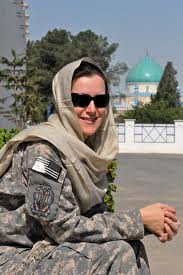
http://navylive.dodlive.mil/index.php/2010/10/19/issues-of-the-veil/#disqus_thread

The U.S. military addresses cultural issues, even in how to dress**

Why does this profound institutional failure persist? I read it and hear versions of the premise that Afghans don’t live in the same globalized world as Americans all the time in defense contexts. The fact that it does persist should give us deep pause about how resources have been expended to create a more ‘culturally aware’ national security community. Continue reading

Posted in: Intercultural Communication, International Politics, Middle East, Narrative and Cognition, Narrative Research, National Security, Political Analysis, Politics and Policy, War and Violent Conflict Tags: , , , , , , , , ,

Lessons in Patriotism

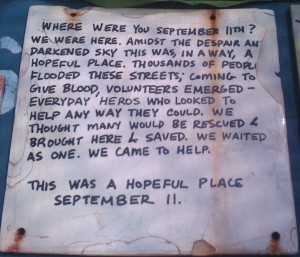
Tile made as part of a project that let people create their own commemorative tiles in 2001; they were later hung on a chain link fence in New York City's Greenwich Village (photo A. Zalman)

Patriotism—love of one’s country—is a treacherous emotion. Too little of it, and we aren’t motivated to make necessary sacrifices on behalf of our national brothers and sisters. Too much of it, or too much of the wrong sort, and exclusionary nationalism—in the form of various ethnic and religious hatreds- takes over. The challenges of getting patriotism right people think that we should avoid these dangers and keep emotion out of our public lives, substituting instead our critical faculties to reason our way to being fair and kind to each other.

But, as philosopher Martha Nussbaum argues, we require this form of love, “distinct from simple approval, or commitment or embrace of principles” in order to act on behalf of people we have never met—those people invoked by the idea of nation. Continue reading

Posted in: Intercultural Communication, National Security, Politics and Policy, War and Violent Conflict Tags: , , , , , , , , , ,

Narrative in Complex Decision Making: an Interview with Mary Crannell

Mary Crannell is one of those people whose broad intelligence and enthusiasm are hard to contain, as I learned when we met recently through a shared acquaintance. As the president of Idea Sciences, a decision-making support consultancy based in Alexandria, VA, Mary spends much of her time thinking about what technologies and processes will help her customers—such as the IMF, NATO, QinetiQ, the US Army, the UK Army, Verizon and Herman Miller, to name a few—arrive at good decisions. She is a frequent traveler to sites of conflict, as in a recent visit to Kabul, Afghanistan, where decision-making is an urgent, complex and ongoing task.

I was gratified when Mary agreed to share some of her thoughts on the role of narrative in decision-making generally, and in directing the American role in the world in productive directions, which is a concern many of her clients share.

Mary Crannell, President, Idea Sciences

AZ: How do you use narrative frameworks to help people make decisions?

MC: It is important to give people a way to define the vision of what they are trying to accomplish whether they are leading a state, a nation or an international organization. Is the system you are leading “on purpose?” We start with a vision. Continue reading

Posted in: Decision making, Information Systems, Intercultural Communication, International Politics, Middle East, Narrative Research, National Security, Public Diplomacy, Strategic Leadership, War and Violent Conflict Tags: , , , , , , , , , , ,

U.S. Should Stop Asking if “They Like Us”

The September 11 attacks spawned a public mania in the United States for uncovering whether people in other parts of the world “like us,” and if not, understand why they “hate us.” Ten years later, the U.S. State Department and, more broadly, national security community is still using this uninformative metric.

It is time to break down what the question “do you like the United States” actually means to those who we ask —whether directly through polling, or through the interpretation of symbolic actions (signs, flag burning) or the aggregation of media statements, or in any other fashion.

Most people in the world, especially those of greatest strategic interest to the U.S., cannot answer whether they like the United States based on personal information or knowledge. Despite rising international travel to the United States, most of the 60 million foreign visitors last year came from just five countries: Canada, Mexico, the UK, Japan and Germany.

The number of those who can answer based on a sense of intellectual or cultural proximity is equally small. The common wisdom since World War II is that American popular culture—movies, television shows, McDonald’s—is loved abroad, even when American policies are not. Globalization encourages competition and hybridization of cultural forms. Economics professor Tyler Cowan has argued that the “21st century will bring a broad mélange of influences, with no clear world cultural leader.” Continue reading

Posted in: Intercultural Communication, International Politics, Middle East, National Security, Politics and Policy, Public Diplomacy Tags: , , , , ,

NY Times tells the Story of the Story of Obama’s Mideast Speech

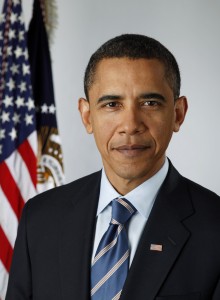
Official_portrait_of_Barack_Obama

The degree to which communication’s globalization has changed the way we think and talk about the news is evident in today’s reporting on Obama’s Middle East speech. Once upon a time, communication-via newspaper, radio, what have you—was considered a transparent vehicle conveying to readers and listeners what was happening on the ground.

Not so any longer. Now we are in full postmodern swing and “the news” highlights not only things that happen in the world (like presidential speeches), but how they are worded, and who these words are supposed to impact, and how different audiences may interpret what is said. The fact is that these elements of communication always mattered, but the speed and visibility of our interactions with those elements has helped press into relief the degree to which they play a part in how events themselves (like peace talks, political decisions, elections, wars) unfold. All of this made the concept of narrative more important—narrative is the elements of communication in action, all working together on a jointly constructed story of events unfolding in real time, and it also the interplay of that construction with events themselves. Continue reading

Posted in: International Politics, Middle East, National Security, Political Analysis, Politics and Policy Tags: , , , ,

Strategic Narrative Definition

There is no concrete thing in the world-like a granny smith apple, or a suspension bridge-to which the term “strategic narrative” refers. Nevertheless, there are an increasing number of mentions of this abstraction out there, which means that a shared definition is beginning to form in the collective minds of different groups, so perhaps we are due for a strategic narrative definition.

Existing literature and commentary, as per a Google search of the term, produces two different-if overlapping-definitions “strategic narrative.”

Strategic Narrative in International Relations

For one community, “strategic” refers to the original meaning of the term to refer to military and political objectives. In ancient Greek, “strategos” is a compound term that means commander or leader of an army. “Strategic” materials are items needed to prosecute a war. Strategy is a subdiscipline of military science that focuses on planning war.

As a result, a “strategic narrative” can be understood as the story that a nation must tell itself, and the world, to wage a war or to maintain its competitive advantage in the international system. This is what the term means in the widely circulating document, “A National Strategic Narrative, written by two members of the American military. Anne Marie Slaughter, who introduces the document, defines a strategic narrative in terms of the competitive interests of a nation.

A narrative is a story. A national strategic narrative must be a story that all Americans can understand and identify with in their own lives. America’s national story has always see-sawed between exceptionalism and universalism. We think that we are an exceptional nation, but a core part of that exceptionalism is a commitment to universal values – to the equality of all human beings not just within the borders of the United States, but around the world. We should thus embrace the rise of other nations when that rise is powered by expanded prosperity, opportunity, and dignity for their peoples.

In one definition, then, “strategic narrative” refers to the use of “narrative” as an element of (national) strategy. This definition can be used in other organizations grounded in developing strategy.

In other professional disciplines, however, the concept of narrative, rather than strategy, grounds the definition.

Strategic Narrative in Public Relations

In public relations and related communications fields, the concept of a vehicle that conveys a message or idea is basic. “Message” is a traditional way of referring to a communication vehicle, but whereas a message can be conveyed in a bullet point, a narrative-a story-requires action, and drama and engaging characters. The idea of narratives as a way of communicating with consumers, or voters, or other constituencies has become popular. There is an entire sub-field now called “narrative marketing,” in which PR firms try to drive business growth through a “story-based perspective” A Canadian firm called Narrative Advocacy Media uses the premise to guide their entire marketing, branding and PR practice.

A strategic narrative, for communication practitioners, is an organizational narrative that has been planned to convey strategically meaningful elements about the organization’s identity and intentions. Some firms use the term narrative without really meaning “story” but rather simply to mean a descriptive text that uses words, instead of numbers.

The national security and business and PR understanding of “strategic narrative” overlap in important ways. All of these disciplines understand that the stories we tell and enact-through processes and actions-in our lives as social, political, creatures, can either be random and unthought, or they can be strategic and we can map them to goals we would like to achieve, and create them as spaces to be shared with the publics and audiences we’d like to reach.

Posted in: International Politics, Marketing & Branding, National Security, Public Relations Tags: , , , , ,

“Global Drops out of “War on Terror” in post-bin Laden Narrative

When President Obama addressed the nation and the world last night to report Osama bin Laden’ death, I was surprised by the absence of a global element in his message. Obama is known for his multilateral, global approach to foreign affairs, and it the lens through which he seems most comfortable framing American actions in the world. The war waged by the Bush Administration in the aftermath of the 9/11 attacks was relentlessly globalized, as the name “global war on terror” suggested. And it has been a consistent thread in U.S. messaging to remind those in the Middle East and Central Asia, and elsewhere, that bin Laden’s brand of global jihad killed more Muslims than any other group.

Obama’s message last night made a strange reversal. The larger narrative framing the search for and killing of bin Laden was emphatically Americanized.

The effect of this framing, if there is any, remains to be seen. In the global swirl of fast moving media, not to mention events, the President’s words may soon fall away as memorable in the global context. Or they may be picked up—Afghans, Iraqis and Pakistanis as may wonder how much of the brunt of an effort reconceptualized as primarily American they must be called to bear.

We can be sure however, that the reminder that Obama was at the helm during this moment of American bravery is intended as a formative statements in the story of his presidency, which is now being written in advance of the 2012 presidential elections.

Posted in: Middle East, National Security, Political Analysis, War and Violent Conflict Tags: , , , , ,

Egypt Narrative Promises a Long Unfolding

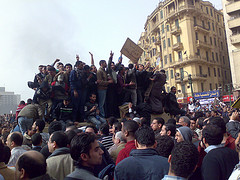
The story of the Egyptian demonstrations continues to unfold (photograph courtesy of Rami Raoof under Creative Commons license)

The story of the Egyptian demonstrations continues to unfold (photograph courtesy of Rami Raoof under Creative Commons license)

The current events unfolding in Cairo offer little in the way of narrative comfort. Instead, news commentators, analysts, even participants—weighing in breathlessly from the street on Twitter or Al Jazeera—seem struck by ambiguous meaning of events. Is looting spontaneous or sponsored by the Mubarak government to provoke requests for government protection? There are no clear successors to a Mubarak government, and no clear mechanism for a non-military succession. Why have the police abandoned the protests?

Continue reading

Posted in: Intercultural Communication, International Politics, Middle East, National Security, Political Analysis, War and Violent Conflict Tags: , , ,