category archive: Marketing & Branding

Disruption Doesn’t Come from Where You Think It Does: A Practical Checklist of Sources of Disruptive Change

Increasingly, I find myself having conversations with colleagues or potential clients spending significant energy trying to get ahead of technological change, that is, to avoid disruption. This is good news. It means that more businesses are working their long-term planning muscles. They are beginning to think about what it takes to thrive in an era of quickly moving technological change. Take for example, these challenges:

  • An IT security company has developed a strong business in cloud-based malware and other solutions, and has been able to grow through the demands of governments for enterprise wide installations and consulting solutions. Yet the firm is wondering whether artificial intelligence / machine learning solutions may overtake their current business.
  • Military organizations of the United States, which have long enjoyed technological superiority over their adversaries, recognize that the democratization of innovation means they no longer hold a monopoly. How can they maintain their position in a world in which the barriers to sophisticated technological development have lowered and democratized?
  • A medical research firm has in hand a viable new treatment that could save lives, but which is based on a medical paradigm that may be upended on the basis of current basic research, and shift the playing field as dramatically as Uber has altered the taxi business.


The Virtues of Holistic Thinking

The chief question in these conversations is: How should we think about these kinds of challenges? Specialists and experts in these various fields typically want to think deeply and narrowly in order to solve problems. This makes great sense: deep expertise is the trait that led them success in the first place. Like race car drivers in a competition to a fixed point, they want to know whether their car could go faster, and whether it will go faster than their competitor’s.

But this narrow focus becomes less useful off the track, in the real world of the unpredictable future. Technology is surrounded and enabled by its complex, dynamic human context. Examples are everywhere of how additional factors play a meaningful role in how deeply and when change occurs:

  • Accidents and Black Swans (unpredictable, high impact events) can shape public attitudes in meaningful ways. The Three Mile Island nuclear power plant accident in 1979 and the 1986 explosion at Cherynobl affected public acceptance of nuclear power (although experts have come to different, and nuanced, conclusions about the degree of change in people’s attitudes). Accidents and the unexpected can also have a strong effect on the legislative environment as policy makers seek to respond to their constituencies.
  • Cultural shifts matter. The introduction of hand washing in the late 19th century into hospitals was partly a function of scientific discovery, but its widespread adoption by doctors had as much or more to do with making the practice a part of their culture and workday. Today, biometric means of identification at airports requires acceptance in the general population as well as regulation to function.
  • Innovations that make a difference alter the rules of the game—they shift paradigms and ask us to see the world differently than we have. Foreseeing potential change has as much to do with the way that you see the world as it does with what is happening in it.The United States and its Coalition partners were not able to respond effectively to the use of IED’s (improvised explosive devices) in the Iraq War because long standing assumptions that military strength stems from advanced technology blinded them to other strategic frameworks. Firms such as Uber and AirBnB disrupted transportation and hospitality by envisioning the relationship of producer (or owner of an asset) and consumer in a new and different way.
The Hand Washing innovation: Cultural attitudes toward hand washing, as well as at the discovery that disease could be spread through physical contact

Disrupting Surgical Practice: Doctor’s attitudes toward hand hygeine were as critical as scientific discovery in changing the ways they worked

A Practical Checklist of Sources of Disruptive Technological Change

If you are in a technology-centric environment, or giving deep thought these days to how transformations could change or upend your industry, it can be worthwhile to consider these additional factors and how they will wider environment in which you function. In exploring what may happen in the next five to ten years, you will need to consider the dynamism and changes that could occur in these realms. Like technology, they will not stand still but are also evolving. This is not a completely exhaustive list, but it should be a good start for broadening thinking about the factors in technological disruption in the marketplace:

  • Regulatory environment
  • Legal environment
  • Major institutions that will use the technology [e.g. Educational systems, manufacturers, medical systems and hospitals, governments, agriculture, etc.]
  • Political issues, political system
  • Direct competitors
  • Indirect competitors [is there anyone outside of your domain seeking to solve the same problem in a very different way?]
  • Marketing possibilities [what is the likelihood of marketing failure or success]
  • Accidents and unintended events that may have an impact
  • Ethics and values [does your technology raise ethical issues that society and government will have to grapple with?]
  • Culture and society [how will people greet the news of this technology or invention, what do they want]

As you consider the ways in which events and activities in these domains may affect the threshold for your success, you may also discover opportunities and possibilities for expanding your domain. Maybe you are the disrupter, not the disrupted.

Posted in: Decision making, Innovation, Marketing & Branding, Narrative and Cognition, Strategic Foresight Tags: , , , ,

Craft Your Past in Order to Shape your Future: the Power of Legacy Stories in Strategic Communications

History belongs to the victors, it is said. But victors also arise because they have asserted interpretive control over their own history. Unlike most inheritances, the narrative that we inherit about who we are and what we are like is one that we have the ability to shape.

Powerful communicators understand that they have a meaningful degree of control over the way they interpret their legacy.

Legacy narratives are the stories that we have inherited that tell us who we are and our place in the world. No one is born without one — we are all born into something, a context, a country, into wealth or poverty, into a family that feels it once was great and has now fallen, or one that feels it is on the ascendent.

Institutions function the same way. The individuals who make them up enter them or lead them learn those narratives when they arrive on the scene. In fact, one of the ways that we become attached to institutions is by absorbing and championing their legacy identities. Companies, schools and universities, and national governments work hard to instill a sense of their legacy in their stakeholders.

When the conditions for success change, the legacy story may no longer be effective

Library of Congress Family

You can interpret your legacy-the story into which you were born-in ways that productively guide your future story.

Legacy stories serve as a touchpoint that helps us explain our current conditions and why we are successful (or failures).

When conditions change, however, the story may suddenly lose its explanatory power, pushing other institutional practices out of alignment.

Case Study: Structural Changes can displace a strong sense of legacy

In in the mid-2000s, I began work at a Fortune 500 company that had just gone from employee-owned to publicly owned. The shift from an employee owned company was a topic of big discussion. Some people had gotten wealthy in the shift, others not so much, but the more salient story was about the disappearance of a shared identity when employee ownership disappeared. People’s sense of who they were had disappeared.

The narrative that people had shared for many years about the firm was that it was a place where independent ideas and attitudes were valued, and where great ideas could find a home. This identity was wrapped up in employee ownership. And when that disappeared so did many people’s sense of loyalty and identification with the firm. In the ensuing years, while I was there, the transition was rocky. We went through several CEOs and multiple internal organization changes.

With greater attention to the symbolic narrative around employee ownership, the firm’s leadership could probably have smoothed that transition considerably. They could have communicated more effectively to employees how important values like independence of thought among employees would continue to be valued.

Case Study: Strong legacies can inhibit necessary changes

A strong sense of legacy can make it very difficult to initiate necessary changes. I saw this firsthand as the CEO of a global membership organization. It was fifty years old, was bleeding members and badly needed to change its ways and modernize. But it had a very powerful legacy story about ‘how things were done’ and ‘who we are’ that was maintained both internally by employees and externally through many of its members. They had helped to build the organization.

This legacy became a barrier, and it became my job to stitch the organization’s existing story to its potential future in a new way. I was fortunate to have advisors around me who helped me to communicate with those who were most afraid of change with more grace than I might have otherwise, and with respect for the important legacy of the organization.

Take Control of Your Legacy Story

The distinct quality of legacy stories is that they can seem static and unchangeable. You know that a legacy story is in operation when someone tells you “that is just the way we are” or that “this is how we have always done things.” The value of the legacy seems to grow as time goes on.

Legacy stories are like magnets that attract and repel— eventually everything that happens can seem to be either because of the central story or in spite of it. They get heavier. They get harder to move. They get harder to change. The story itself takes on the power of immovable fact.

But it doesn’t have to be this way.

Legacies are rewritten successfully when organizations or members of them start telling the story differently. This may be a grassroots effort or a conscious decision on the part of leaders.

A Quick Note about Ethics

One small but important note about ethics and integrity. Making up pasts out of whole cloth or lying about the past is not the route to lasting power and not what I am talking about here. Ethics and strength go hand-in-hand. People know when legacy stories are being stretched or when they are being told without integrity or respect for their basic facts. Within that ethical band, though, we have room to create from the ingredients of our inherited stories, those that will guide our intentions and communicate our values going forward.

What is Your Legacy Story? Is it Hurting or Helping your Ambitions?
Do you have a legacy story that is holding you or your organization back? Here are a few questions to ask to help clarify:

  • What are our legacy stories?
  • How do we use our legacy story? Do we use it to perpetuate the status quo or to mobilize change?
  • What are the forgotten parts of our legacy? Are any of those usefully revived in order for us to reinvent ourselves?
  • Are there values or activities that we are interested in pursuing in the future? How can we link our legacy to new initiatives in ways that fortify and support our new directions, and that help explain to outsiders what we are doing?
  • What are the key moments or events that seem to illuminate the theme of the legacy story? Are there other moments, or events or even representative figures who should be brought in in order to begin shifting the story?
  • Legacy stories are often told in legacy syntax, using habitual turns of phrase. What happens if you retell the story in a different way and what does it illuminate?

If you have comments about legacy stories or questions, I’d welcome hearing from you. You can reach me at [email protected] or via the contact form here.

Posted in: Intercultural Communication, Marketing & Branding, Strategic Communication, Strategic Leadership, Uncategorized Tags: ,

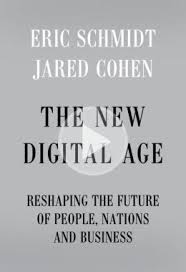
7 Necessary Narratives for the New Digital Age

In the future, nearly everyone will be connected to the Internet and to each other, claim Jared Cohen and Eric Schmidt in The New Digital Age.

Mass connectivity will transform our relationships, our governments, our work, our bodies and the objects around us. But even these dramatic transformations will not change the fact that we are corporeal creatures, and that we will still live lives grounded in phnew digital agephysical circumstances, whether those are urban or rural, rich or poor, lucky or unlucky.

We will also come into the world with a set of inherited stories about who we are, what our lives mean, and what the future looks like. These stories will have the same universal threads they always have: we will still have stories of love, stories of family, stories that try reconcile life’s fundamental unfairness. But they will also fail in important ways to explain the transformations of our lives, and the new ways in which we will do old things.

We need new stories

We need new stories. Creating them is of necessity not only a collective task, but a transnational one. As we grow even more connected, we also grow more capable of exporting our ideas about who we are and what is important on others, wherever they are. Yesterday, two Nigeria-descended men hacked a third to death on a London street, and then stayed on the scene to tell how they saw themselves in a world at war: “We must fight them as they fight us.” As we grow more connected, and more willing to share our selves with others, maybe pernicious forms of shame—that universal emotion—will be knocked out, and we’ll be more healthy.

It all depends on how we decide to tell our future. Here are seven of the areas where we will need new stories in the new digital age, as described by Schmidt and Cohen.


7 Necessary Narratives for the New Digital Age

1. The Body

Both religion and science fiction have long dreamed of worlds in which humans transcend bodies, to become virtual souls. In the new digital world, however, we will shape our identities online but experience them in the physical world. How will we understand health and illness, and mortality, if we have the capacity to monitor our daily rhythms in minute ways?

2. Personal Identity

Schmidt and Cohen tell us that identity will be each of our most valuable commodity in the future, and that our true personal identity will be the one that we shape online.

How will we choose to tell our life stories and in what ways will the autobiographical form change in a world in which there is essentially no privacy? Where will we think our “real” self resides. Where will the associations with privacy as a space of intimacy, daydreaming, erasable exploration, unrecorded experimentation with who we are, in order to practice who we could be, relocate, when we have no privacy?

3. News

Our concepts of journalism and news reporting have already undergone dramatic changes; journalism has become in many ways a collective task that falls to professional reporters and citizens alike, and to groups and organizations that put out versions of the news that support particular causes or points of view.

As an increasing number of voices join in the journalistic task, the work of professional media will evolve. The media might become a trusted validator of unsubstantiated accounts, or an integrator of news from different kinds of sources. The value of objectivity may fade, while versions of what subjective news that maintains its integrity will emerge—this will be the new narrative of news.

4. Cybersecurity

Different forms of public security – whether they are in the arena of health, or counterterrorism, or child safety – operate according to different metaphors, storylines and images. Those around cyber-security may coalesce around metaphors of health and hygiene: we are told to practice “cyber-hygiene.

Schmidt and Cohen introduce Microsoft Chief Research and Strategy Officer, who has also recommended a “World Health Organization” for cyber-activity, and the practice of quarantining computers that have been infected with viruses. As Adriane Lapointe, a National Security Agency official has observed, the public health metaphor may serve as the basis for a meaningful public narrative:

Like any good metaphor, it invites us to consider illuminating similarities between two overtly dissimilar things—malware on the internet and infectious disease in a community—similarities that can lead us to reframe a familiar topic. It also identifies a policy precedent, reminding us that we do, as a society, recognize the need to impose some restrictions on individuals who involuntarily pose a certain kind of threat to others, and that we have a mechanism to do this which might be relevant to cybersecurity matters. Whether we ultimately decide that this mechanism or approach is appropriate to the cyber challenge, the metaphor has certainly helped to broaden thinking about the subject.

5. National Identity

The nation-state has been the bedrock of our civic identities for the last couple of centuries, and the idea that every nation deserves its own territorial state a driving narrative of the 20th century. But new diasporas resulting from increased migration, coupled with digital connectivity, are decoupling the nation from the state, creating virtual, de-territorialized nations.

How will a de-territorialized nation narrate its future? How will cultural practices that have been grounded in place be translated into practices of other place? Will other forms of bonding, such as investment in the home country, become a standard part of an individual’s narrative of their national identity? Will the idea of a relationship to a particular land wither for some communities, and if so, to what effect?

6. Dissident Leadership

There is much to protest in this world, and the low cost of entry to share dissident views will lead to a widening number of protestors seeking attention for their cause. Many of these causes will be worthy and compelling, so it is no longer enough to offer the platitude the most persuasive stories will gain our attention. Rather, we—the public that dissidents must win over-may begin to change the meta-story, or standards, by which we evaluate leaders and causes.

Schmidt and Cohen offer that dissident leaders likely to become popular will be able to: “command a following and crowd-source their online support,” will know how to exploit digital marketing tools, and will show their commitment by putting themselves at physical risk.

We can already guess that digital marketing skills are not the most important skills for someone seeking a leadership role in a dissident setting. We can use this recognition starting now to inoculate ourselves against easily accepting simply the most digitally skilled. We can ask, instead, what are the qualities—what is the story—of a leader who is likely to be successful, who understands the institutions they want to change, and lead that change on the ground as well as in virtual space.

7. Justice

Cameras in our smallest devices make it easy to record the human capacity for barbarism in its many forms. Violence, sexual assault, cruelty to animals, hate speech all find their way into digital form on a regular basis, easily arousing our instinctual repugnance. As Schmidt and Cohen observe, these recordings can become the basis for “crowd sourced justice,” which may take the form of mob retaliation, from harassment to violence.

But we could instead form new habits of collective responsibility—using our connectivity to make sure that those who commit bad acts are dealt with according to our legal precepts and best values, and to explore together how to deal with bad behavior at the community level. Which narrative, and which set of practices that prevail, depend on how we decide to narrate our opportunity to ‘crowd source justice,’ which behaviors we highlight and celebrate, and how we talk about what we see online.

Posted in: Books & Films, Intercultural Communication, International Politics, Marketing & Branding, Popular Culture, Public Relations Tags: , , , , , , ,

Intertextuality for Strategic Communication

The Power of Reference, Allusion and Quotation in Communication

Two recent films, Skyfall and Anna Karenina, are made more intensely meaningful by their intentional intertextuality-their incorporation of previous iterations and interpretations of the story they are themselves telling. Both offer insights into the ways communicators can benefit from the same kind of internal referentiality.

The Concept of Intertextuality

Literary and linguistic theorists began to work with the concept of intertextuality in the mid-1960s, when theorist Julia Kristeva coined the term. Scholarly definitions have proliferated and grown increasingly technical in the intervening half century. For our purposes, the following definition works just fine: Intertextuality means that texts – novels, paintings, films, but also tax codes and thank you letters –gain meaning not through their reference to an external reality, but by their reference to pre-existing other texts. Intertextuality is not a choice, but rather an inevitable by- product of creating, because we are always creating into already existing histories, discourses and ways of interpreting. These existing frames have already partly shaped what we will produce and how it will be recieved. An author or an artist may intend to give us something original, but they can’t, fully. We readers, in turn, never have direct access to a work, but can only get at it by making our way through its prior iterations and interpretations.

James Bond and Anna Karenina are among the most iconic popular texts in modern Western culture. The James Bond series, which is the longest-running film series in history, has given us the rules by which we define spy thrillers. Anna Karenina is no longer only the Leo Tolstoy novel, but also the dozens of derivative films, ballets, operas and musicals that have been created since the late 19th century.

Both are completely enmeshed in our everyday language — we think things about ourselves through the mesh of their expressions:“Bond, James Bond,” and “Shaken, not stirred,”are shorthand invocations of suave masculinity. “All happy families are alike, but each unhappy family is unhappy in its own way,” has become a catch-all syntax for describing the singularity of just about anything, including in statistics, where the “Anna Karenina principle” is applied to ecological and economic puzzles.

Semiotics professor Daniel Chandler explains the implications of intertextuality: Continue reading

Posted in: Books & Films, Intercultural Communication, Marketing & Branding, Narrative forms, Popular Culture, Public Relations, Strategic Communication Tags: , , , , , , ,

Measuring National Power

Has the Eurozone crisis led to a loss of European Union power?

Washington D.C. was even more full of diplomatic cars and dark suited men than usual this weekend, as the the World Bank and International Monetary Fund held their annual spring meetings. Historically dedicated to shoring up ‘developing’ regions, this year’s focus was on the Eurozone crisis, that ongoing ripple of effects from the near financial collapse of several EU countries.

Some policy makers think that the EU’s loss of economic power will reduce its power on other issues, as the New York Times has reported: Continue reading

Posted in: Crisis Management, Decision making, International Politics, Marketing & Branding, National Security, Politics and Policy, Public Diplomacy, Public Relations Tags: , , , , , ,

Strategic Narrative Definition

There is no concrete thing in the world-like a granny smith apple, or a suspension bridge-to which the term “strategic narrative” refers. Nevertheless, there are an increasing number of mentions of this abstraction out there, which means that a shared definition is beginning to form in the collective minds of different groups, so perhaps we are due for a strategic narrative definition.

Existing literature and commentary, as per a Google search of the term, produces two different-if overlapping-definitions “strategic narrative.”

Strategic Narrative in International Relations

For one community, “strategic” refers to the original meaning of the term to refer to military and political objectives. In ancient Greek, “strategos” is a compound term that means commander or leader of an army. “Strategic” materials are items needed to prosecute a war. Strategy is a subdiscipline of military science that focuses on planning war.

As a result, a “strategic narrative” can be understood as the story that a nation must tell itself, and the world, to wage a war or to maintain its competitive advantage in the international system. This is what the term means in the widely circulating document, “A National Strategic Narrative, written by two members of the American military. Anne Marie Slaughter, who introduces the document, defines a strategic narrative in terms of the competitive interests of a nation.

A narrative is a story. A national strategic narrative must be a story that all Americans can understand and identify with in their own lives. America’s national story has always see-sawed between exceptionalism and universalism. We think that we are an exceptional nation, but a core part of that exceptionalism is a commitment to universal values – to the equality of all human beings not just within the borders of the United States, but around the world. We should thus embrace the rise of other nations when that rise is powered by expanded prosperity, opportunity, and dignity for their peoples.

In one definition, then, “strategic narrative” refers to the use of “narrative” as an element of (national) strategy. This definition can be used in other organizations grounded in developing strategy.

In other professional disciplines, however, the concept of narrative, rather than strategy, grounds the definition.

Strategic Narrative in Public Relations

In public relations and related communications fields, the concept of a vehicle that conveys a message or idea is basic. “Message” is a traditional way of referring to a communication vehicle, but whereas a message can be conveyed in a bullet point, a narrative-a story-requires action, and drama and engaging characters. The idea of narratives as a way of communicating with consumers, or voters, or other constituencies has become popular. There is an entire sub-field now called “narrative marketing,” in which PR firms try to drive business growth through a “story-based perspective” A Canadian firm called Narrative Advocacy Media uses the premise to guide their entire marketing, branding and PR practice.

A strategic narrative, for communication practitioners, is an organizational narrative that has been planned to convey strategically meaningful elements about the organization’s identity and intentions. Some firms use the term narrative without really meaning “story” but rather simply to mean a descriptive text that uses words, instead of numbers.

The national security and business and PR understanding of “strategic narrative” overlap in important ways. All of these disciplines understand that the stories we tell and enact-through processes and actions-in our lives as social, political, creatures, can either be random and unthought, or they can be strategic and we can map them to goals we would like to achieve, and create them as spaces to be shared with the publics and audiences we’d like to reach.

Posted in: International Politics, Marketing & Branding, National Security, Public Relations Tags: , , , , ,

How to Market an Unpopular Cause

Kosovo Albanian ethnic costume/dance, courtesy of WikimediaKosovo Albanian ethnic costume/dance, courtesy of Wikimedia

How do you market an unpopular cause?

In a world crowded with attention-worthy causes, why do some get the backing of the international community, while others languish? This good question is being asked by the recipients of this year’s Hope Fellowship, a fund established by the National Albanian American Council to strengthen the role of women in policy and decision-making in the Balkans. They are seeking recognition for their largely unrecognized country, Kosovo, which split off from Serbia and declared independence in 2008. In order to help them in an upcoming training session, I went looking for new models that might help structure the challenge of making their so-far-unpopular country more widely understood in the European Union and beyond.

There are no easy models or quick fixes for a people seeking to establish a legitimate identity among other nations, as Kurds and Palestinians well know. And an over focus on media and message dissemination (should we have a Facebook page? How many radio stations?) while important, is no replacement for the deeper work of developing a national identity story that resonates in international channels.

While seeking models, I found two excellent books that shed light on how embattled causes get attention from the international community. Although they are both specific to politics, they offer valuable insights for any organization seeking to make an impact on another.The Marketing of Rebellion: Insurgents, Media and International Activisim by
Clifford Bob has been highly regarded since its publication in 2005.

Bob seeks to answer the question: “How do a few political movements challenging Third World states become global causes célèbres, whereas most remain isolated and obscure? He answers answers by looking through the dual lens of marketing and globalization. The marketing perspective, as he puts it, “denies that there is a meritocracy of suffering,” in which NGO backing and international sympathy lie—as we would hope—with the best causes. Instead, “local movements insistently court overseas backing, and their promotional strategies count.” Continue reading

Posted in: Books & Films, International Politics, Marketing & Branding, Public Diplomacy Tags: , , , , , , ,

Transmedia Storytelling Goes Beyond Entertainment

Transmedia Storytelling, according to media psychologist Pamela Rutledge in Psychology Today is “the new standard for 21st century communication:”

Transmedia storytelling uses multiple media platforms to tell a single, coherent story or narrative that unfolds across time. Each media piece-whether it’s a website, novel, video games, mobile apps, or a film-provides different points of access and can engage different demographics. Each media components add to the story while functioning as a standalone experience. Each component invites some level of participation. The story can be experienced and appreciated at any stage, but the cumulative effect of all the pieces makes a larger, richer and more engaging message experience.

Until recently, transmedia storytelling has been primarily a term-of-art for the entertainment business. The concept is making its way beyond entertainment into the world of business and organizational strategy. Rutledge explains it as a branding and marketing function, but also holds out executive development benefits. In a transmedia context, the message cannot precede the media. Instead of telling the same story in the same way in different spaces, executives will begin with an understanding of the simultaneously fragmented and interlocking qualities of our communications space, and seek to help us experience their story across time and in different spaces. In the midst of this basic process, they will learn their own story-and its gaps and inconsistencies-much better, according to Rutledge.

The potential applications of this framework in other contexts readily suggest themselves. Political campaigns, development projects, education, and business, could all make use of the formula that transmedia storytelling proposes, in which different pieces of a coherent story are told through different media, in different ways, at various times.

New ways of exploiting this framework are sure to arise, as the list of commentators elaborating, and stretching the concept to new limits, suggests:

  • Transmedia Storytelling 101, by Henry Jenkins
  • Georgy Cohen on transmedia storytelling as part of higher education branding
  • Transmedia Storytelling, What is It? by John Ryan


Posted in: Marketing & Branding, Popular Culture Tags: , ,