category archive: International Politics

The Psychology of Conspiracy Theorists

Conspiracy Theories are Narratives on Steroids

President Obama's Birth Certificate Doesn't Quell Conspiracy Theory that He Isn't an American Citizen

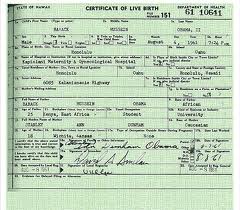
Conspiracy theories are narratives on steroids. In a story, the plot moves forward when one thing causes the next. In a conspiracy theory, cause is an outsized malignant force that knows everything and controls all events. Nothing happens randomly, all events are tied to the larger purpose of an always mysterious, always malefic agent. The amplification of current events into objects of global scrutiny also amplifies conspiracy theories, making them powerful agents in shifting public opinion. Thus with the so-called Birthers framing of President Obama as a foreigner, despite the overt presentation of facts proving that the president was born in the American state, Hawaii.

Conspiracy theorists stubbornly resist the facts at hand, finding reasons other than those given for why events unfold the way they do. Many Pakistanis appear to doubt that Osama bin Laden died as reported in mainstream news. According to a Gallup poll, “nearly half (49%) thought that the whole incident was actually staged for some reason or other. Only 26% thought the al-Qaeda chief was really killed on the night in question.” That’s a lot of people who think that the story circulated in mainstream media is crackpot, at best. And this week, 57% of respondents to a French poll believe that Dominique Strauss-Kahn is the victim of a conspiratorial plot by political rivals, rather than the victimizer of a hotel housemaid, as has been reported. Continue reading

Posted in: Books & Films, Conspiracy Theories, International Politics, Narrative Research, Politics and Policy, Popular Culture Tags: , , , , , , , ,

NY Times tells the Story of the Story of Obama’s Mideast Speech

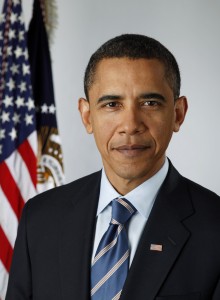
Official_portrait_of_Barack_Obama

The degree to which communication’s globalization has changed the way we think and talk about the news is evident in today’s reporting on Obama’s Middle East speech. Once upon a time, communication-via newspaper, radio, what have you—was considered a transparent vehicle conveying to readers and listeners what was happening on the ground.

Not so any longer. Now we are in full postmodern swing and “the news” highlights not only things that happen in the world (like presidential speeches), but how they are worded, and who these words are supposed to impact, and how different audiences may interpret what is said. The fact is that these elements of communication always mattered, but the speed and visibility of our interactions with those elements has helped press into relief the degree to which they play a part in how events themselves (like peace talks, political decisions, elections, wars) unfold. All of this made the concept of narrative more important—narrative is the elements of communication in action, all working together on a jointly constructed story of events unfolding in real time, and it also the interplay of that construction with events themselves. Continue reading

Posted in: International Politics, Middle East, National Security, Political Analysis, Politics and Policy Tags: , , , ,

Strategic Narrative Definition

There is no concrete thing in the world-like a granny smith apple, or a suspension bridge-to which the term “strategic narrative” refers. Nevertheless, there are an increasing number of mentions of this abstraction out there, which means that a shared definition is beginning to form in the collective minds of different groups, so perhaps we are due for a strategic narrative definition.

Existing literature and commentary, as per a Google search of the term, produces two different-if overlapping-definitions “strategic narrative.”

Strategic Narrative in International Relations

For one community, “strategic” refers to the original meaning of the term to refer to military and political objectives. In ancient Greek, “strategos” is a compound term that means commander or leader of an army. “Strategic” materials are items needed to prosecute a war. Strategy is a subdiscipline of military science that focuses on planning war.

As a result, a “strategic narrative” can be understood as the story that a nation must tell itself, and the world, to wage a war or to maintain its competitive advantage in the international system. This is what the term means in the widely circulating document, “A National Strategic Narrative, written by two members of the American military. Anne Marie Slaughter, who introduces the document, defines a strategic narrative in terms of the competitive interests of a nation.

A narrative is a story. A national strategic narrative must be a story that all Americans can understand and identify with in their own lives. America’s national story has always see-sawed between exceptionalism and universalism. We think that we are an exceptional nation, but a core part of that exceptionalism is a commitment to universal values – to the equality of all human beings not just within the borders of the United States, but around the world. We should thus embrace the rise of other nations when that rise is powered by expanded prosperity, opportunity, and dignity for their peoples.

In one definition, then, “strategic narrative” refers to the use of “narrative” as an element of (national) strategy. This definition can be used in other organizations grounded in developing strategy.

In other professional disciplines, however, the concept of narrative, rather than strategy, grounds the definition.

Strategic Narrative in Public Relations

In public relations and related communications fields, the concept of a vehicle that conveys a message or idea is basic. “Message” is a traditional way of referring to a communication vehicle, but whereas a message can be conveyed in a bullet point, a narrative-a story-requires action, and drama and engaging characters. The idea of narratives as a way of communicating with consumers, or voters, or other constituencies has become popular. There is an entire sub-field now called “narrative marketing,” in which PR firms try to drive business growth through a “story-based perspective” A Canadian firm called Narrative Advocacy Media uses the premise to guide their entire marketing, branding and PR practice.

A strategic narrative, for communication practitioners, is an organizational narrative that has been planned to convey strategically meaningful elements about the organization’s identity and intentions. Some firms use the term narrative without really meaning “story” but rather simply to mean a descriptive text that uses words, instead of numbers.

The national security and business and PR understanding of “strategic narrative” overlap in important ways. All of these disciplines understand that the stories we tell and enact-through processes and actions-in our lives as social, political, creatures, can either be random and unthought, or they can be strategic and we can map them to goals we would like to achieve, and create them as spaces to be shared with the publics and audiences we’d like to reach.

Posted in: International Politics, Marketing & Branding, National Security, Public Relations Tags: , , , , ,

How to Market an Unpopular Cause

Kosovo Albanian ethnic costume/dance, courtesy of Wikimedia

Kosovo Albanian ethnic costume/dance, courtesy of Wikimedia

How do you market an unpopular cause?

In a world crowded with attention-worthy causes, why do some get the backing of the international community, while others languish? This good question is being asked by the recipients of this year’s Hope Fellowship, a fund established by the National Albanian American Council to strengthen the role of women in policy and decision-making in the Balkans. They are seeking recognition for their largely unrecognized country, Kosovo, which split off from Serbia and declared independence in 2008. In order to help them in an upcoming training session, I went looking for new models that might help structure the challenge of making their so-far-unpopular country more widely understood in the European Union and beyond.

There are no easy models or quick fixes for a people seeking to establish a legitimate identity among other nations, as Kurds and Palestinians well know. And an over focus on media and message dissemination (should we have a Facebook page? How many radio stations?) while important, is no replacement for the deeper work of developing a national identity story that resonates in international channels.

While seeking models, I found two excellent books that shed light on how embattled causes get attention from the international community. Although they are both specific to politics, they offer valuable insights for any organization seeking to make an impact on another.The Marketing of Rebellion: Insurgents, Media and International Activisim by
Clifford Bob has been highly regarded since its publication in 2005.

Bob seeks to answer the question: “How do a few political movements challenging Third World states become global causes célèbres, whereas most remain isolated and obscure? He answers answers by looking through the dual lens of marketing and globalization. The marketing perspective, as he puts it, “denies that there is a meritocracy of suffering,” in which NGO backing and international sympathy lie—as we would hope—with the best causes. Instead, “local movements insistently court overseas backing, and their promotional strategies count.” Continue reading

Posted in: Books & Films, International Politics, Marketing & Branding, Public Diplomacy Tags: , , , , , , ,

Egypt Narrative Promises a Long Unfolding

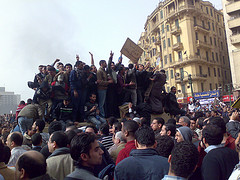
The story of the Egyptian demonstrations continues to unfold (photograph courtesy of Rami Raoof under Creative Commons license)

The story of the Egyptian demonstrations continues to unfold (photograph courtesy of Rami Raoof under Creative Commons license)

The current events unfolding in Cairo offer little in the way of narrative comfort. Instead, news commentators, analysts, even participants—weighing in breathlessly from the street on Twitter or Al Jazeera—seem struck by ambiguous meaning of events. Is looting spontaneous or sponsored by the Mubarak government to provoke requests for government protection? There are no clear successors to a Mubarak government, and no clear mechanism for a non-military succession. Why have the police abandoned the protests?

Continue reading

Posted in: Intercultural Communication, International Politics, Middle East, National Security, Political Analysis, War and Violent Conflict Tags: , , ,

The danger of a single story

Nigerian novelist Chimamanda Adichie talks about “the danger of a single story:” what happens when a single narrative about a people or place dominates our imagination. For Adichie, it meant she was greeted on arrival in the United States for college with disbelief that the middle class professor’s daughter was authentically African—she was not tribal enough, and was neither starving nor HIV-ridden.

“The single story creates stereotypes and the problem with stereotypes is not that they are untrue, but that they are incomplete. They make one story become the only story.”

Thanks to Michael Paone of the New York City Coalition against Hunger for passing it on.

Posted in: Books & Films, Intercultural Communication, International Politics, Uncategorized Tags: , , ,