tag archive: U.S. military

Creating an Innovative Workforce in a Large Bureaucracy: Lessons from the U.S. Air Force

Strategic Narratives for innovationIn 1963, Air Force pilots were awarded NASA’s Project Mercury astronauts the Collier Trophy by President Kennedy for their pioneering work in spaceflight. Today, the Air Force seeks to innovate anew

The idea that bureaucracy inhibits innovation is far from new: Political scientists in the early 1960s were already making the charge that, “There is a growing feeling that modern organizations and particularly the large, bureaucratic business and government organizations, need to increase their capacity to innovate” (Victor Thompson, Administrative Science Quarterly, June 1965).

Fifty years later, this ‘feeling’ continues to grow, often in bureaucracies that have also grown in the interim. The US Air Force is one such institution. Yet, there are creative ways to advance, as my opportunity to spend a day earlier this month with the Air Force Chief of Staff and an advisory group of my peers made abundantly clear. A diverse group of us were gathered-technology entrepreneurs, corporate CEOs, government executives, futurists and Air Force officials—to share ideas and offer our recommendations.

Although we talked extensively about practical fixes that could begin to create new pockets of innovation across the Air Force, we all agreed that ultimately the United States government as a whole will need a new way of thinking about innovation and failure. This new strategic narrative will tell a story about the US government as innovative, respectful of necessary failures, and open to true diversity of thought.

The Challenges to Innovation Facing Large Bureaucracies are Formidable
The challenges opposing innovation are formidable.

Like other large bureaucracies, the Air Force has:

  • A globally distributed workforce-in this case it is over 300,000
  • Mission critical areas in which failure is not an option
  • Decision-making that lies beyond its ability to control: Congress and the White House have a strong say in how the Air Force allocates its resources and defines incentives for performance
  • A deeply embedded structure for performance and advancement
  • A budget that is static and set by others

The lack of control over much of their own destiny, coupled with a stringently defined mission, makes it difficult to incentivize innovation. As the Air Force officials explained to us, the Service can best reward new problem solving approaches only at the tactical level, over which it has authority. Strategic innovation is more complicated.

Yet, doing nothing is not an option, in the view of the Air Force. The need to innovate is pressing. While the United States Air Force once had a clear advantage among other nations, global power shifts and the democratization of technology have made it much simpler for states and non-state actors to advance. Like other elements of the United States government, there is palpable concern these days that without establishing the conditions for innovation, the United States will fall behind, with consequences that have not yet been contemplated by national leaders.

When Mission Failure is Not an Option, Incentivizing Failure as Part of Innovation is also Difficult

One of the key recommendations for organizations seeking to innovate is to permit, even encourage failure. At the Pentagon, we discussed corporate leaders in the technology sphere who encourage failure, knowing that it is a necessary part of successful innovation.

Yet unlike a private corporation, the Air Force must explain itself to Congress, which does not look kindly on resources or programs are anything but highly successful. Neither the mindset nor the way in which budgets and programs are evaluated currently support useful failure. Other government agency or corporate managers seeking to drive innovation from below may recognize this problem as well.

How to Introduce a Culture of Innovation

The ideas that my colleagues and I came up with over the course of an afternoon, although designed to serve the Air Fove, may hold value for the leaders of similarly large, bureaucratic or networked organizations.

  • Public private collaborations are essential to accelerate innovation. Opportunities to work on a project with colleagues from other institutions could be a reward for innovation as well
  • Develop an expectation that a certain amount of failure is not only tolerable, but productive. Identifying a threshold of expected failure (20%, for example) can be a useful metric to show that innovative ideas are being developed and tried. This kind of mindset can be introduced to those who hold the purse strings, like Congress.
  • Create rewards and incentives that are not financial when the budget is fixed. Millennials (and even non-millennials!) may appreciate a shorter workweek or the opportunity to work on projects of their choosing more than money.
  • Ensure better teamwork by “translating” different fields to one another. In order to accelerate productive collaborative work, interdisciplinary team members need to understand the values, norms and vocabularies of their colleagues. This kind of understanding can be encouraged organically by embedding team members with their counterparts, so they can absorb how others talk and work. It can also be productive to surface this need and hold workshops or other guided discussions in which teammates explicitly translate their work to others.
  • Develop teams in which diversity of thought is encouraged and nurtured. In many cases, external signs of diversity (race, ethnicity, gender) are markers of diversity of thought because different people experience the world differently, but sometimes there are no external markers. Seek people who think and create differently from one another, and encourage the conditions in which those differences are valued.

These are practical steps by which a large bureaucracy can begin to establish a collective narrative of innovation that resonates throughout the organization.

If you would like to discuss developing an innovation narrative in your organization, I’d be pleased to hear from you at [email protected]

Posted in: Decision making, Innovation, National Security, Strategic Communication, Strategic Leadership, Workforce strategy Tags: , , , , , , , ,

Let’s Celebrate the 2nd Anniversary of “A National Strategic Narrative”

This has been a tough spring for national cohesion in the United States. Automatic federal spending cuts called sequestration kicked in after Congress failed to agree on how to manage the federal budget. The Senate voted down a bill that would expand background checks for gun purchasers, despite strong support around the country. And bombings at the Boston Marathon committed by young men hovering between foreign identity and American citizenship confused any clear idea of American identity.

This makes it a good time to mark the two year anniversary of A National Strategic Narrative, published in April 2011 by aNational Strategic Narrativeuthors Captain Wayne Porter, USN and Col Mark Mykleby, USMC under the pseudonym Mr. Y.

The document grabbed the attention of politicians and pundits here in the United States, and foreign ministers in Europe and the Middle East. Perhaps most important, it garnered attention from everyday citizens for proposing a reinvigorated American identity and role in the world. Continue reading

Posted in: Books & Films, Decision making, Intercultural Communication, International Politics, National Security, Politics and Policy, Strategic Communication, Strategic Leadership Tags: , , , , , , , , , , ,

The Definition of Strategic Narrative: an Evolving Concept in International Affairs

In an earlier post, I outlined ways in which the term strategic narrative is used in current practice, in public relations—as an element of marketing—and in the academic field of international relations. This post returns to the evolution of the term as an applied concept in foreign affairs.

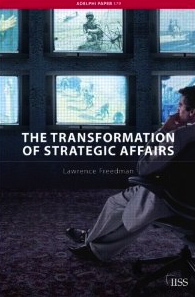
According to International Relations professor Alister Miskimmon (who I asked by email), the first published use of the term “strategic narrative” was by Lawrence Freedman, a professor of War Studies at King’s College, London. In 2006, Freedman wrote a paper called The Transformation of Strategic Affairs. Many of the insights in Freedman’s work stem from the Western experience of war in the post-9/11 years, and the discovery—the hard way, through experience—that the era of large scale land warfare may be decisively over. In its place, the future promises smaller wars, waged by insurgents as well as governments, in which human factors such as behavior, culture and communication play meaningful roles.

In this context, Freedman identifies “strategic narratives” as a kind of secret weapon of networked combatants fighting irregular wars. In Freedman’s view, a story that connects people emotionally to an identity and a mission “helps dispersed groups to cohere and guides its strategy. Individuals know the sort of action expected of them and the message to be conveyed.”

Thus, in Freedman’s definition, narrative is a function of strategy in the most traditional sense related to the science of war. In that vein, he argues that: Continue reading

Posted in: International Politics, Middle East, Narrative Research, National Security, Politics and Policy, War and Violent Conflict Tags: , , , , , , , , , , , ,

Afghanistan Narrative, Still Wrong, but Reparable

Earlier this month, Benjamin Hopkins and Magnus Marsden, authors of the forthcoming Fragments of the Afghan Frontier, argued strenuously in a New York Times Op Ed that the U.S. strategy in Afghanistan is as culturally inept as it was when we went to war a decade ago. The American obsession with viewing Afghanistan though the lens of tribal tradition is borrowed from 19th century Brits, whose understanding tribal mores was in large part composed of fanciful inventions of their own. Above all:

Afghanistan is not a country of primitive tribes cut off from the modern world. The singular focus on tribes, the Taliban, and ethnicity as the keys to understanding and resolving the conflict misses the nuances of the region’s past and present. Rather than fanatical tribesmen or poor victims in need of aid, many of these people are active and capable participants in a globalized economy.

http://navylive.dodlive.mil/index.php/2010/10/19/issues-of-the-veil/#disqus_thread

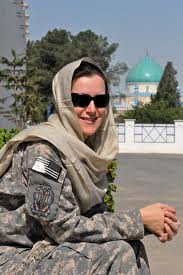
The U.S. military addresses cultural issues, even in how to dress**

Why does this profound institutional failure persist? I read it and hear versions of the premise that Afghans don’t live in the same globalized world as Americans all the time in defense contexts. The fact that it does persist should give us deep pause about how resources have been expended to create a more ‘culturally aware’ national security community. Continue reading

Posted in: Intercultural Communication, International Politics, Middle East, Narrative and Cognition, Narrative Research, National Security, Political Analysis, Politics and Policy, War and Violent Conflict Tags: , , , , , , , , ,

Narrative in Complex Decision Making: an Interview with Mary Crannell

Mary Crannell is one of those people whose broad intelligence and enthusiasm are hard to contain, as I learned when we met recently through a shared acquaintance. As the president of Idea Sciences, a decision-making support consultancy based in Alexandria, VA, Mary spends much of her time thinking about what technologies and processes will help her customers—such as the IMF, NATO, QinetiQ, the US Army, the UK Army, Verizon and Herman Miller, to name a few—arrive at good decisions. She is a frequent traveler to sites of conflict, as in a recent visit to Kabul, Afghanistan, where decision-making is an urgent, complex and ongoing task.

I was gratified when Mary agreed to share some of her thoughts on the role of narrative in decision-making generally, and in directing the American role in the world in productive directions, which is a concern many of her clients share.

Mary Crannell, President, Idea Sciences

AZ: How do you use narrative frameworks to help people make decisions?

MC: It is important to give people a way to define the vision of what they are trying to accomplish whether they are leading a state, a nation or an international organization. Is the system you are leading “on purpose?” We start with a vision. Continue reading

Posted in: Decision making, Information Systems, Intercultural Communication, International Politics, Middle East, Narrative Research, National Security, Public Diplomacy, Strategic Leadership, War and Violent Conflict Tags: , , , , , , , , , , ,

“Global Drops out of “War on Terror” in post-bin Laden Narrative

When President Obama addressed the nation and the world last night to report Osama bin Laden’ death, I was surprised by the absence of a global element in his message. Obama is known for his multilateral, global approach to foreign affairs, and it the lens through which he seems most comfortable framing American actions in the world. The war waged by the Bush Administration in the aftermath of the 9/11 attacks was relentlessly globalized, as the name “global war on terror” suggested. And it has been a consistent thread in U.S. messaging to remind those in the Middle East and Central Asia, and elsewhere, that bin Laden’s brand of global jihad killed more Muslims than any other group.

Obama’s message last night made a strange reversal. The larger narrative framing the search for and killing of bin Laden was emphatically Americanized.

The effect of this framing, if there is any, remains to be seen. In the global swirl of fast moving media, not to mention events, the President’s words may soon fall away as memorable in the global context. Or they may be picked up—Afghans, Iraqis and Pakistanis as may wonder how much of the brunt of an effort reconceptualized as primarily American they must be called to bear.

We can be sure however, that the reminder that Obama was at the helm during this moment of American bravery is intended as a formative statements in the story of his presidency, which is now being written in advance of the 2012 presidential elections.

Posted in: Middle East, National Security, Political Analysis, War and Violent Conflict Tags: , , , , ,

The Challenge of Hearing the Opposition

Last week, I had the privilege of guest lecturing about the uses of narrative for defense professionals at the National Defense University. It was a terrific experience all around—the students were impressively willing to think and talk about storytelling, which isn’t exactly a traditional part of a military education.

I was eager to have the students work with material that reflects their real world, and thought a 2009 interview with an Afghan member of parliament telling the story of civilians killed by American bombing in her province would be of great interest. And so it was.

In my own eagerness to bring the content of the video into the classroom, I hadn’t made much of the fact that the interview had been conducted and released by CODEPINK, a women’s anti-war group. Not so the class. After the class, a couple of participants made it clear they disapproved of my video choice.

Continue reading

Posted in: National Security Tags: , , , ,